Sunday, March 8, 2020

Volatile Markets - Is this It?

With a variety of markets in turmoil it seems appropriate to comment and ask if we are seeing the beginning of a long predicted "next financial crisis". It's a bit too early to say, but obviously it is prudent to monitor events closely and have a plan of action in mind should we see indications that this is more than just a short term disruption in market stability.


Below is a Q&A style of analysis to try and offer some thoughts on the current situation in the markets.

------------------------------------------------------------------------------------------------------------------------

Q: Are seeing the "snowflake that will trigger the avalanche" to use a phrase coined by Jim Rickards to describe the next major finanicial crisis?


A: We have covered this topic extensively over the years here and our position remains unchanged. Due to the extraordinary monetary policies that have been used by the Fed and other central banks around the world to stave off a major deflation, the conditions for another new major financial crisis basically exist all the time. No one can be sure what event or combination of events might actually trigger a major deflation event where world markets basically blow up monetary stimulus bubbles that have been created. Events like these we see right now certainly could lead to that. But we have seen a number of similar potential triggers arise and subside. So, only time will tell us the answer. But clearly this a time to pay very close attention to what is happening.

Q: What impact will crashing oil prices have on the system?


A: An ongoing collapse of oil prices where the price stays below $40/bbl for an extended period of time absolutely could significantly impact systemic stability. While consumers will obviously benefit from lower energy costs, the US oil industry could see severe contraction with many of the shale based operators going under because they cannot generate positive cash flows and are over leveraged with debt. Not only would that create massive loss of jobs in the industry, millions of other people are impacted. Millions of elderly royalty owners who depend on royalty checks to supplement social security for example. Banks holding debt on some over leveraged companies could suffer significant losses and then there could be spillover into the financial sector. The suggestion here is to monitor oil prices. If they stay too low for too long, expect this to be another potential trigger alongside the current global virus pandemic. Also, the Fed continues to do unusual repo market operations. All these are things to keep an eye on.

Q: What about gold?

A: We have long advised readers here to monitor gold prices and the US dollar. Sharply rising gold prices are an indication that money is moving into safe havens. For now, money is moving into both gold and US government securities. At some point if gold keeps soaring and US debt securities start to lose investor confidence, that would be a clear signal there are serious threats to systemic stability in play.

Q: Why isn't silver moving higher with gold?

A: Silver has an industrial commodity component. At this time investors likely think of silver more like they do oil and that industrial silver demand may fall off if things keep going downhill due to the virus pandemic and the other factors in play at this time. So silver is more likely to lag gold under those kind of investor assumptions. If at some point a shift occurs and a full fledged move out of paper assets and into hard assets were to unfold, silver likely catches up to gold and more in line with the historic price ratio between the two metals. In that case, investors would probably be viewing silver more like an alternative currency as they would gold under stressful conditions. Silver is almost always much more volatile than gold.

Q: Is all this (virus scare, oil price collapse, etc) a "planned event" to trigger a crisis so that the old system can be replaced with some kind of new one? Or just a series of coincidences?

A: This is a question I am seeing out there quite a bit and also from some readers by email. It is really impossible to answer. I have no evidence to provide an answer one way or the other. I would suggest that readers simply monitor how events unfold over time and then draw your own conclusions. If the pandemic fears subside in a few weeks and markets return to normal behavior, this will all be viewed as more like just normal market correction activity. Some are viewing the oil price collapse as part of a geo political strategy by Putin to exact some revenge on the US for sanctions. Jim Rickards is pointing out on his twitter feed that Putin has been piling up gold and may believe he can accept oil income losses to be offset by gains in his gold holdings. So there are lots of theories out there as to what is driving things.

If this situation drags on and continues to impact markets over time, we are more likely to see the potential for a new major crisis. If that happens, the blame game will begin in earnest. In the political arena, both sides will blame the other for the crisis. We can expect a lot of disinformation coming at us from many directions as everyone attempts to shift blame to someone else. In a scenario like that, we may never really get a true answer. And conspiracy theories will abound I have no doubt. I would have no way to determine fact from fiction in a scenario like that. I simply just hope it doesn't happen. But hoping does not mean I don't think people should have some kind of plan in mind in the event another major crisis does emerge.

Q: What should people do?

A: There is nothing new to say in answer to this question than what we have said here for years. Another major financial crisis is always in the background as a possibility. People like Jim Rickards have been predicting it for years. The average person will not be able to impact the macro situation one way or the other. A prudent plan is to have a backup plan in mind in case another major financial crisis were to unfold. Being as diversified as possible is always wise. Having an emergency cash fund is always a good idea. Having some of that in precious metals is a good idea. Having some extra provisions around is a good idea, especially if the virus pandemic worsens and distribution is impacted or people are confined more to prevent spread of the virus.

Whether this event turns into a serious financial crisis or not, it should be telling you that having no backup plan in place is a very poor idea. Having no emergency fund or any hard assets of any kind is simply foolish and is NOT a diversified portfolio. Having no extra provisions on hand in the event of any kind of emergency is also not prudent behavior.
-------------------------------------------------------------------------------------------

Added notes: One reader sent an email providing some helpful information on the virus and ideas on how to help your immune system be as healthy as possible. So I am linking those below for anyone interested in the info. An important part of dealing with any potential crisis situation is to try and be as informed as possible.

https://www.youtube.com/watch?v=qqZYEgREuZ8
(Strengthening Your Immune System)

https://www.youtube.com/watch?v=gmqgGwT6bw0
(Can Vitamin D be helpful?)

https://www.youtube.com/watch?v=Eeh054-Hx1U
(Can Zinc be helpful?)


I was also forward the link below to an article which talks about the impact of the virus in China on Bitcoin mining:

https://decrypt.co/21710/chinas-pending-bitcoin-mining-catastrophe


Friday, March 6, 2020

Facebook Libra Project News Updates

A thank you again to a reader for keeping us alert to recent news on the Project Libra front. Below are links to a couple of recent update articles appearing in The Information. It looks like the project is taking some different turns in response to reaction from potential regulators. 


I am getting the feeling that partnerships between central banks and private initiatives in the area of payments systems may be the next area to keep an eye on over time as these articles seem to suggest.

------------------------------------------------------------------------------------------------------------------------

Facebook Revamps Libra Plans - Bowing to Regulators

"Facebook is scaling back its ambitious plan to upend the global financial system with a new digital currency.

Succumbing to pressure from regulators, Facebook has decided to offer its users digital versions of government-backed currencies, including the U.S. dollar and the euro, in addition to the proposed Libra token, according to three people familiar with the matter. Facebook still plans to go ahead with the launch of a digital wallet that would allow users to make purchases and send and receive money, though it will delay the rollout by several months."


Please click here to read the full article on The Information


THE TAKEAWAY
"Facebook’s overhaul of its plans to create a new digital currency called Libra raises a host of questions about how widely adopted the currency will be and how other changes to its strategy will differentiate Libra from existing cryptocurrencies."


------------------------------------------------------------------------------------------------------------------------
My added comments: This is an area we have covered here quite a bit over the past several years. Some time ago we concluded that any changes to our present system from these "new technology" concepts would likely be gradual and meet with resistance from central banks and government regulators. This has proven to be the case as the pace of change in this area has moved very slowly with most central banks more inclined to just research and observe than to implement major changes.

Project Libra appears to have shaken the established system up enough to get them interested in figuring out ways to explore partnering with new technologies and continue looking into the feasibility of actually implementing "digital currencies" at some central banks here and there. 

Most of the major central banks are still not showing any inclination to move forward any time soon with actual implementation. My guess is that we may see some partnerships with smaller regional central banks emerge sooner in an effort to upgrade payment services and promote more financial inclusion in areas where that is needed. 

We'll continue to monitor this space and watch for news over time. Again, I want to thank readers here that continue to help me watch this and alert me to news items. It is greatly appreciated.

Wednesday, March 4, 2020

Update Note to Readers

I have been on a family vacation over the past couple of weeks and am just now catching up on emails and news events, etc. As soon as I can I will post new articles. Obviously, the global panic related to the virus epidemic is causing some havoc in the markets, so clearly we should follow that closely. It's too early for me to tell how much impact it may have.

The political environment in the US remains as volatile and divided as ever so that will continue to be something to monitor all year since it could impact markets and financial stability. The rhetoric will only get more and more intense of course until the election is over with. Whether the results lead to any significant changes is impossible to project at this time. It is reasonably safe to assume that if President Trump is re elected, the odds of significant changes to our present monetary financial system are low.
=======================================================

This is way off topic, but I do endeavor to try and provide helpful information here as best I can. We just finished a family vacation to Walt Disney World and were fortunate to be able to experience the new attraction their called The Rise of the Resistance which is part of their new Star Wars themed area.

If readers here have any interest in information about that attraction or tips we used that seemed to help us obtain a coveted boarding pass, I would be happy to do an off topic blog post to share the information. The boarding passes for this ride are hard to get due the the overwhelming demand every day that Disney is currently unable to meet).

Just email me to let me know if there is enough reader interest to warrant it. Meanwhile my daughter wrote this article which may be useful:

https://livelovelocalblog.com/how-to-get-a-rise-of-the-resistance-boarding-group/

This recent article linked below gives you an idea of how crazy the situation has become there at Disney World because of the surge of demand for this new attraction:

https://blogmickey.com/2020/02/dont-visit-disneys-hollywood-studios

We had never crowds like this before except around holidays and certainly not at the end of February. It appears that the attraction is drawing in thousands of extra visitors to the parks every day, even on days not historically known for large crowds.

Monday, March 2, 2020

Managing Global Liquidity as a Global Public Good

Although it has now been some time since the world has seen any kind of global banking or liquidity crisis, the potential for one still garners the attention of policy makers. 


A thank you to a reader here for pointing me to this report on the Robert Triffin International web site that urges policy makers to add more tools to monitor global liquidity and provide more early warnings of potential crisis. Below is the excerpted introduction to the report which includes a link to the full pdf version of the report.

--------------------------------------------------------------------------------------------------


Robert Triffin International, Centro Studi sul Federalismo, December 2019

"The cumulative balance sheet effects of a decade of low interest rates, long as well as short, have become very large. This report examines the magnitudes of such effects through the many dimensions of global liquidity. This is not purely a monetary policy phenomenon as regulatory policies, restrictive fiscal policies in some advanced economies and structural factors have all had important impacts. 
Several indicators suggest increased financial vulnerabilities and higher risks of destabilising market dynamics. The dollar debt of non-banks outside the United States is at a new record: currency mismatches and leverage in the private sector have increased. The dollar funding of non-US banks looks fragile. Greater reliance on international bond markets has created new, opaque risks. There is widespread unease about the domination of the dollar, and about the inadequacy of the Global Financial Safety Net. The search for alternative multi-currency arrangements continues. But the need to address the risk of a new dollar liquidity crunch is urgent. 
International oversight of this issue is at present too fragmented. Policy responses at national level may require action by several bodies – central banks, regulators and Treasuries. The report therefore proposes that the Financial Stability Board, with inputs from the BIS, the IMF, the OECD and others, report regularly on global liquidity to G20 Ministers and Governors so they can act in time to avert a crisis."


Tuesday, February 25, 2020

Blog Reader Provides Link to an Article on Jacques Rueff

One of the benefits of doing this blog is that from time to time I get reader input pointing me to a variety of information and articles that touch on the ideas of how a monetary system should work.


In this case, I want to thank a reader here for fowarding me this link to an article that explores the views of French economist Jacques Reuff. Below I have pasted in a few excerpts from the article. The reader also advises me that he is collaborating with the author of this article (Samuel Gregg) on another article that will propose some ideas on how a monetary system should be structured later on this year. 


We are always happy to feature serious ideas and proposals on this topic here and then add them to our marketplace of ideas for monetary system reform page. The intent is to build an archive all on one blog page linking to a number of ideas for monetary system reform to make it easier for readers to consider them and compare them. I could not do this without all the help I get from reader input and experts who help me out. I always want express my thanks for that here.


-------------------------------------------------------------------------------------------------

Jacques Reuff's Monetary Order and US


"We live in strange monetary times. In Europe and Japan, central banks have implemented negative interest-rates to stimulate sluggish economies, despite overwhelming evidence that such policies aren’t working. The European Central Bank has even restarted its four-year old quantitative-easing program to try and overcome anemic growth throughout the Eurozone. Across the Atlantic, the Federal Reserve is trying to calibrate interest-rates to help America avoid a recession, even though there’s no consensus among forecasters of an imminent recession. Calls for the Fed to head towards negative-interest rates grow louder.
These trends suggest an international monetary system in which some of the world’s leading central banks seem driven by political reaction to immediate events and unfocussed upon what a primary goal of any sound monetary system: the provision of a stable unit of account that facilitates the free economic choices of consumers, households, and businesses over the long-term. From this standpoint, a type of monetary disorder is growing throughout the global economy.
Addressing the problem in a comprehensive way surely requires consideration of what truly constitutes order in a monetary system. Few people thought more about this question than the French economist and civil servant Jacques Rueff (1896-1978).
Searching for Order
"Perhaps the twentieth century’s foremost French economist, Jacques Rueff is primarily remembered for designing the economic reforms (Le plan Pinay-Rueff) imposed by Charles de Gaulle’s incoming government in December 1958 upon a France mired in economic crisis. These reforms—trade liberalization, spending-cuts, major tax and welfare changes, the termination of subsidies to many industries, and the franc’s devaluation—are widely acknowledged as having saved France from a perfect storm of currency instability, high inflation, uncompetitive industries, feeble capital markets, and low productivity. During the last fifteen years of his life Rueff moved from the French to the world stage, becoming a leading voice for restoring the classic gold standard as the Bretton-Woods system gradually collapsed."
. . . . 

Real Rights and False Rights
"But what type of framework should guide the state’s bolstering of monetary stability? This brings us to one of the most innovative aspects of Rueff’s thought about monetary order: his distinction between true or real rights (vrais droits) and false rights (faux droits).
By “real rights,” Rueff had in mind rights such as rights to property. These establish a minimum of economic order by clarifying who owns what, thus enabling people’s natural propensity and liberty to possess, use, and exchange things. Such rights nevertheless need to be given form, structure, and content by government policy and legal decisions. The establishment of contract laws, for instance, allows individuals to coordinate their use of their property in mutually beneficial ways.
The legal recognition of these rights is effective because it accords with economic truths about humanity. Such rights are thus “real.” Conversely, law and policies which contradict certain economic facts—supply and demand, the workings of incentives, humans’ tendency to pursue their self-interest, etc.—end up, Rueff says, creating “false rights.”
A government may declare, for instance, that people have a right to healthcare. But if markets in healthcare are not allowed to work, such a right merely exists on paper: hence, its “falseness.” Moreover, the fact that the state has affirmed this to be a right but proved unable to realize it, encourages disrespect for the law as well as increased demands by citizens that the government actualize what it cannot. In democratic societies, Rueff believed, it was hard for politicians to resist such pressures. This produces policies which magnify the proliferation of false rights through the economy."
. . . .

Conclusion
"The key to monetary order, Rueff teaches us, is to create institutions which help market relationships to function, rather than subverting them. Establishing and protecting such rules requires the inner conviction needed to resist temptations to short-termism, and a fortitude that seems beyond most legislators and many central bankers today. That, however, is all the more reason for us to listen to Jacques Rueff—someone notoriously unafraid to speak economic truth to politicians of all persuasions—and heed his insights in our own age of creeping monetary disorder."

-------------------------------------------------------------------------------------------------------------------------
Added note: We will keep an eye out for the new article mentioned by the reader expected to come out later this year and feature it here if and when it becomes available online.


Thursday, February 20, 2020

OMFIF Report - Central Bank Currencies - A Question of Trust

I got an email from the OMFIF (Official Monetary and Financial Institutions Forum) based in London alerting me to new report they have issued. The report is a look at global public confidence in monetary, financial, and payment institutions as it relates to the potential issuance of central bank digital currencies. It is based on a global public opinion survey poll.


Below I have pasted in the Executive Summary for this new report. I believe readers can access the full report here by providing an email address. I was able to do so by providing one. This is an interesting new look at who the public might most trust in the future for the issuance of "digital currencies". I would encourage readers to download the full report.
-------------------------------------------------------------------------------------------------------------------------

Executive Summary


Central Banks in Pole Position to Issue Digital Currency

"DIGITAL payments are proliferating worldwide and are proving increasingly popular. In China, the mobile payments market is worth $5.7tn and is dominated by two behemoths, Alipay and WeChat Pay. Facebook wants to launch Libra, a global digital currency, later this year, a move which has prompted wider discussion about central bank digital currencies. 

While the rise in digital payments is global, different regions have disparate needs. In advanced economies, services such as FedNow in the US and Faster Payments in the UK are evolving to meet the need for faster back-end payment solutions which can underpin retail payments. In emerging markets, the surge in mobile payments makes it much easier for workers to send remittances home to their families.

These changes in consumer behaviour and the surrounding policy debate make this the ideal time to present this OMFIF report, which centres on the findings of a global opinion poll on public trust in monetary institutions, payment characteristics and digital currency. The poll was conducted by Ipsos MORI across 13 advanced and emerging countries.

Our findings suggest that central banks are well-positioned to issue digital currency. In almost all countries, respondents indicated that they would feel most confident in digital money issued by the domestic monetary authority. Respondents globally expressed a lack of confidence in digital money issued by a tech or credit card company, particularly respondents from advanced economies.

The survey reveals significant differences in attitudes depending on levels of income and education, age and nationality. High-income and young respondents express the most confidence in current and future digital money, and consider speed to be part of the appeal.

The results indicate that openness to digital offerings rises with income and education levels, but declines with age. When respondents are asked about their preferred ideal characteristics for a payment method, they are unanimous in citing safety from fraud and theft as the most important feature, across all countries. Speed is the least important characteristic, suggesting that digital money will have to improve its safety features if it is to be to adopted widely.

The findings suggest that cash remains king: it has the highest average score across all different payment characteristics posed to respondents, across most different income, education and age groups. Cash is particularly popular in some advanced markets, such as the US and Britain. Respondents in emerging markets show the greatest level of willingness to embrace digital currency in the future and are open to the question of who should issue it.

These findings should prove informative and useful for monetary policymakers and private sector practitioners alike. They provide the first clear, quantitative indication of which groups and markets are most amenable to digital currency, and can serve as guidelines for regulators, central bankers and those working in the private sector who want to market their digital offerings to a broader audience.


-------------------------------------------------------------------------------------------------------------------------
Added comment: Once again I would call your attention to the next to last paragraph posted above from the Executive Summary. While we continue to see predictions of a future "cashless society" in various media articles, every study or report I see from any kind of official organization always includes a comment about how important cash remains as a payment system. They also usually note that there is no expectation that cash will be removed from the system any time soon and most studies even point out a number of hardships that would result from total elimination of cash used for payments. I think it is important to emphasize that for readers here.

Saturday, February 15, 2020

BIS Update - Central Bank Digital Currencies

In the recent BIS (Bank for International Settlements) monthly update, they have several articles dealing with the status of central bank digital currencies. Below I have pasted in this recent update.

-------------------------------------------------------------------------------------------------


February 2020

The green swan 

How should central banks preserve financial stability in the age of climate change?

Central bank digital currencies survey 

Central banks are doing extensive work on digital currencies, and a small number indicate that they are likely to issue one soon.

Policy responses to fintech

FSI Insights paper provides a cross-country overview of policy responses to fintech developments.

Monetary policy frameworks

At an American Economic Association panel organised by the BIS, policymakers discuss whether monetary policy frameworks are still adequate to cope with the challenges central banks are currently facing.

Creating a credible and trusted digital currency

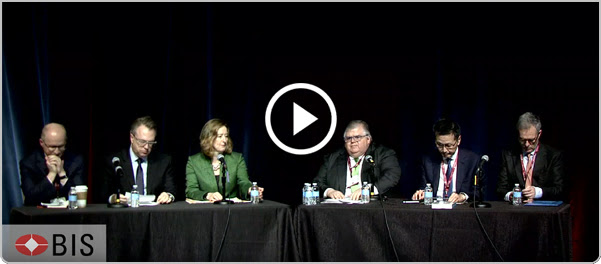
Benoît Cœuré takes part in a panel discussion on the likelihood of a trusted global digital currency and what trends could shape its future.
More BIS publications 

Statistics: Cross-border bank lending accelerates
Global cross-border bank lending grew by 9% year on year at end-September 2019.

Announcement: BIS expands membership
The BIS invites the central banks of Kuwait, Morocco and Vietnam to become members and increases emerging market representation in key committees.

Statistics: US dollar credit outside the US expands
Dollar credit to non-bank borrowers outside the US grew by 5% year on year at end-September 2019.

Wednesday, February 12, 2020

Fed Chairman Discusses a US "Digital Currency" with Congress

We continue to monitor this space since central banks do continue to talk about the idea of possible issuing central bank digital currencies. We have several articles on the blog this month that cover various aspects of this issue.


Here we have Fed Chairman Powell responding to Congressional inquiries about it. There is nothing really new to report here but below I have posted a couple of excerpts from this news article on Yahoo about Powell's recent comments to Congress.

--------------------------------------------------------------------------------------------------
"On Tuesday, Federal Reserve Chairman Jerome Powell gave his monetary policy report in front of the U.S. House Financial Services Committee, and then withstood hours of questions from members of Congress.
Rep. Bill Foster, a Democrat from Illinois, spent his entire five minutes asking Powell about cryptocurrency.
That line of questioning yielded some perspective from Powell that the Fed chair not previously given, and his responses could stoke optimism or disappointment from many in the cryptocurrency world, depending on how they want to parse his typically very deliberate word choice.
So, what did we learn about Powell and crypto?"
. . . .

“Frankly, Libra really lit a fire,” Powell said, “and was a bit of a wakeup call that this is coming fast and could come in a way that is quite widespread and systemically important—fairly quickly, if you use one of these big tech networks like Libra did. We fully appreciate the importance of making quick progress—we have not decided to do this, though. There are many questions that need to be answered around digital currency for the United States, including cyber issues, privacy issues; many many operational alternatives present themselves, so we’re going to be working through all that.”

-----------------------------------------------------------------------------------------------------------------------
My added comment: This article goes on to further state that Chairman Powell made it clear that the Fed has no current plans to implement a central bank digital currency in the US and another article I read said the US sees no need for it any time in the next five years.
Coming up later this month are some updates from the BIS on its views on central bank digital currencies and a new report from the OMFIF on CBDC's based on a recent global survey poll.

Added note: A thank you to reader Doug in the comments below for this link related to the Fed and a future digital currency:

https://www.coindesk.com/trumps-fed-nominee-judy-shelton-says-us-should-be-proactive-on-digital-dollar


Saturday, February 8, 2020

Word Economic Forum - Central Bank Digital Currency Policy Toolkit

A thank you to a reader for passing along the link below to a report from the recent World Economic Forum that discusses policy tools for central banks considering using either a wholesale or retail version of a central bank digital currency.


We continue to see very little change in that arena so far and continue to expect any changes we do see to be slow and gradual in nature.

-------------------------------------------------------------------------------------------------

WEF - Central Bank Digital Curreny Policy-Maker Tookkit

Executive summary

"In recent years, central bank digital currency (CBDC), a new form of digitized sovereign currency, has risen to prominence as a policy and operational consideration for many central banks, ministries of finance and other institutions. The intricacies of implementing CBDC are complex and the implications are wide‑reaching. As a result, policy‑makers may find themselves in uncharted waters when attempting to evaluate the potential benefits and trade‑offs associated with CBDC.

 The World Economic Forum’s CBDC Policy‑Maker Toolkit seeks to address the need for a concise CBDC decision guide that provides comprehensive and risk‑aware information to policy‑makers. This document serves as a possible framework to ensure that any CBDC deployment fully considers the costs as well as the potential benefits, appraising a multitude of risks and evaluating deployment and governance strategies, alternative solutions and other salient factors. Notably, it is not exhaustive, and instead intends to serve as a complement to additional research that any policy‑maker considering CBDC should conduct.

The CBDC Policy‑Maker Toolkit provides high‑level guidance and information for: 

– Retail, wholesale, cross-border CBDC and alternatives in private money such as “hybrid CBDC”
 – Large, small, emerging and developed countries."

. . . . 

"As policy‑makers navigate this process, they should consider how CBDC may introduce new capabilities that support regulatory goals while also introducing new risks or compliance vulnerabilities. CBDC could potentially be used as a tool to achieve policy objectives such as improved safety and resilience in payments systems; increased efficiency, access and competitiveness of payments systems; better data transmission and reporting to central banks; and financial inclusion. The achievement of these goals with CBDC must be evaluated in the full context of the associated trade‑offs and risks that CBDC may entail." 

------------------------------------------------------------------------------------------------
My added comment: I noticed this note from page 19 of the report linked above regarding the future of cash. I added the bold underline below for additional emphasis:


"Physical cash, particularly small banknotes, guarantees financial inclusion more than any other means of payment. Cash serves as a last‑resort means of payment and store of value in the event of payment‑system shocks and failures. For many, it is also their primary means of payment and savings. The central bank should not develop policies that remove small banknotes from retail use until a fully reliable alternative is available to all members of the population, which may not be possible." (see page 19)

Once again, for those expecting cash to disappear any time soon, I see nothing on the immediate horizon that suggests that to be the case for the reasons noted above and others that various central banks have cited including the US Federal Reserve.

-------------------------------------------------------------------------------------------------

Added note: The Bank for International Settlements (BIS) produces this press release on CBDC news:

Central Bank Group to Assess Potential for CBDC's

"The Bank of Canada, the Bank of England, the Bank of Japan, the European Central Bank, the Sveriges Riksbank and the Swiss National Bank, together with the Bank for International Settlements (BIS), have created a group to share experiences as they assess the potential cases for central bank digital currency (CBDC) in their home jurisdictions. 
The group will assess CBDC use cases; economic, functional and technical design choices, including cross-border interoperability; and the sharing of knowledge on emerging technologies. It will closely coordinate with the relevant institutions and forums - in particular, the Financial Stability Board and the Committee on Payments and Market Infrastructures (CPMI). 
The group will be co-chaired by Benoît Cœuré, Head of the BIS Innovation Hub, and Jon Cunliffe, Deputy Governor of the Bank of England and Chair of the CPMI. It will include senior representatives of the participating institutions."

Monday, February 3, 2020

Facebook's Project Libra Continues to Face Headwinds

We covered Project Libra initiated by Facebook here some last year. While the project (which involves Facebook attempting to launch another payment system based on its own "Libra" cryptocurrency) attracted a lot of attention, we did note that we expected it to also encounter a lot of resistance as well.


That has proven to be the case as the two articles linked below point out. Below is a brief excerpt from each article.

-------------------------------------------------------------------------------------------------

Coindesk.com - Vodafone is the Latest Big Company to Quit Project Libra

"Vodafone and Libra both confirmed Tuesday the company is no longer part of the consortium. Vodafone will dedicate resources previously intended for Libra to its well-established and successful digital payment service M-Pesa, which the company plans to expand beyond the six African nations currently served."

. . . . 

While Libra originally intended to launch in the first half of 2020, this timeline was thrown into doubt last year when Facebook CEO Mark Zuckerberg said regulatory concerns might push back the date.

Speaking on stage at the Blockchain Central panel held by the Global Blockchain Business Council at Davos, Disparte (Libra Association) further hinted at a possible delay in the launch schedule."


Bloomberg - Facebook's David Marcus Vows to Move Forward with Libra

"The Facebook Inc. executive responsible for the embattled Libra cryptocurrency said he doesn't fault companies that pulled out of the project, adding that he's optimistic more organizations will sign on despite intense opposition from politicians who seem to fear financial innovation."

. . . . .

"Visa, Stripe and Mastercard received letters earlier this month from Democratic U.S. Senators Sherrod Brown and Brian Schatz that urged the companies to "carefully consider" how they would manage potential risks associated with Libra before proceeding with the project. Asked if he thought the letter constituted a threat from the senators to the companies, Marcus responded, "I don't know, what it did it sound like to you?" He added that such correspondence can have a "chilling effect."


----------------------------------------------------------------------------------------------------------
My added comment: We continue to report here that major changes to the present monetary system are likely to be gradual in nature unless some kind of systemic crisis forces more rapid change. As these articles continue to illustrate, the status quo is quite powerful and hard to change without some kind of outside force impacting its stability.

Added note: Upcoming this month are several interesting articles on the future prospects for various kinds of digital currencies. These artciles will include some of the latest information from the World Economic Forum, the Bank for International Settlements, and the OMFIF based in London. If you review all these articles, you will be pretty well caught up with some of the latest information on this topic. 

Tuesday, January 28, 2020

Some News Notes as we Move into 2020

Right now there are just a few news items to follow as best I can tell. As we have stated repeatedly, it is obvious that the political battle in the US will pretty much suck all the oxygen out of the room this year at least until the elections are over in November. Who knows if even that will end the seemingly never ending intense political warfare of a nation that is clearly deeply divided on many issues including the economic ones we try to follow here. Below I am noting a few things to continue to follow since it is possible they could impact markets and even systemic stability.


1- Continued All Out Political Warfare 

It is now completely clear that a deeply politically divided nation will not find many issues to agree on and the old days of meeting somewhere in the middle seem to be gone. This environment creates a situation where no matter who wins elections, the other side wages never ending war to prevent anything from being done if possible. While this has led to gridlock for some time, if either side gains enough power to move an agenda, the system could be disrupted since the opposing policy proposals tend to be radically different from each other. It's just something to continue to monitor.

Added note 1-31-2020: Although it appears the US Senate will soon vote for acquittal in the current impeachment trial, we can expect that this will not change the political atmosphere in any significant way. Several Democrats have stated they will just continue to restart new impeachment proceedings so long as President Trump is in office. This suggests the all out political warfare likely will not decrease in intensity. Beyond that, we can now expect that in the future any elected President who faces a House of Representatives controlled by the opposing political party will probably be impeached at some point in their term. In our view here, all this is because the general public is completely divided and not likely to unite any time soon. So, no matter who wins any particular election, the opposition (or "the resistance" if you prefer that term) will now use any means available to them to try to block the agenda of their political opponents. We can't change the reality of how the world is and the enormous lust for power that obviously exists. So we need to correctly understand it in order to make the best personal financial decisions as these events can and do impact markets.

2- Dr. Judy Shelton nomination to the Federal Reserve

Dr. Shelton is widely viewed as someone who has "unconventional" views and who might challenge what some view as "groupthink" at the Fed. It is really unknown whether this would be a major factor impacting the system or not, but we should keep an eye on things at the Fed when she joins the Board of Governors.

3- Ongoing Repo Market Operations by the Fed

We have followed this since last year and it seems to still be a potentially significant issue to keep an eye on. The Fed says these unusual market operations are not an indication of any serious problems in the system. Skeptics and critics are raising many questions about that. All we can do is just monitor events and see what happens. But obviously, if there is some kind of major systemic problem inside the system that the Fed prefers not to disclose, the potential to disrupt the stability of the system would exist. Certainly it should be watched carefully.

4- What Happens with Project Libra - Facebook payment system

This project is meeting a lot of resistance from politicians and other interested parties as we expected here. We will do an update on this with some recent news on this Facebook project.