Showing posts with label Jim Rickards. Show all posts

Monday, October 12, 2020

Jim Rickards and Lyn Alden Discuss Inflation/Deflation Monetary Polices and More

One question I see over and over again that people ask is why haven't we seen hyperinflation with all the monetary stimulus and money creation in the US and around the world over the last ten years. It's a good question and the answer may be a bit more complex than many might expect. In this recent panel discussion, Lyn Alden and Jim Rickards tackle this question and offer some interesting thoughts on the answer. Below I have pasted in the video an further below a few bullet points on the full discussion which runs over an hour.


Panel Discussion on 10-5-2020


  • Inflation/Deflation Discussion
  • What causes Inflation - Not Just One Thing
  • Why are monetary policies increasingly failing to achieve their objectives?
  • Thoughts on the upcoming US elections and their Impact on markets
  • Prospects for the Gold Market with all the uncertainty ahead of us

This is a discussion I think readers here can appreciate and learn from, I recommend taking time to listen to the full discussion if possible

Tuesday, September 1, 2020

A Wild Two Month Ride into November 3rd?

Readers here know that we try hard not to push any kind of political agenda here. The goal here is to just try to provide the best solid information we can find. However, with the electric election atmosphere we have coming up over the next couple of months in the US, it would be almost irresponsible not to try and alert readers to keep an eye out for just about any kind of wild series of events over the next two months. 


Below we will try make a bullet point list of just some of the major potential trigger points for all kinds of wild market activity between now and the election.

-------------------------------------------------------------------------------------------------------------------------

First. let's try and assess the ongoing tensions between the US and China which could certainly be potential triggers for volatile market behavior. Here are just some I can think of:

-the US feels China played a role in the spread of the virus pandemic and this has hurt US-China relations significantly

-in response the US has become more aggressive in taking confrontational moves against China including restricting access to US dollars

-some have suggested the US could go further and attempt to freeze China out of the SWIFT system (international payments system) and the CHIPS system

- Jim Rickards has suggested the US can put a hold on the $1.4 Trillion in US bonds held by China legally without defaulting on the bonds as a claim for reparations from financial damage incurred from the virus

-China has been working hard to setup an alternative payments system to bypass the SWIFT system if needed and to reduce dependence globally on the US dollar

-numerous articles are appearing in both western and eastern media suggesting the US dollar is being weaponized as part of the buildup of tensions 

-some articles have appeared suggesting that China could be the entity taking large physical deliveries of gold as part of this ramped up "cold war" with the US and the west (perhaps to try to drive the gold price sharply higher and add further disruption to markets heading into the election?). This is speculation, but we know some large entity or entities have been taking large deliveries of physical gold this year in markets that usually trade mostly paper futures contracts.

If we accept news reports that US and Chinese relations have soured and that China might prefer a Biden Administration over another Trump Administration, we then have even more speculations that could increase tensions further. These include suggestions China is trying to influence the US elections. Some reports have China supporting VP Biden and Russia supporting President Trump. Whether these reports are accurate or not, the potential exists for all this to come into play in a negative way if the US election is very close (and perhaps even not quickly decided). Whoever loses the election is more likely to claim they lost because of foreign interference in the election process. No one will be surprised if the losing party refuses to accept the winner as valid (So yes, 2020 could get even worse).

I think it goes without saying that another election with no immediate clear winner (like the 2000 election) could be a significant trigger for market volatility. We are already seeing reports that both sides have hired hundreds of lawyers. Allegations of possible voter fraud won't surprise anyone. This could also mean the winner won't be known quickly after the election. 

If all that is not enough, I suspect that anyone with a pulse thinks that both sides involved in this election will pull out all the stops to win. We should not be surprised at any kind of major unsavory news that surfaces just prior to the election (or any dramatic attention grabbing events). If there was ever an election year to somewhat anticipate an "October surprise", it would have to this one. 

On top of everything else, we have the US and the world struggling with a once in a century global pandemic and all kinds of disruption to both normal economic activity and just regular social activity. Frustrations from all this continue to be high and we can expect that everyone trying to win this election will be wanting to assist voters in knowing who to blame for all this. We have seen tensions flare up from this situation all year long already.

With just 60 days until the election. all the ingredients described above (and others I didn't even think of) create the potential for a very wild ride into early November. How wild could things get? Jim Rickards forwarded me this link to an article that explains it could get wilder than than any of us might imagineIt is possible the wild ride could go well beyond November 3rd; depending upon how the election turns out and how the public accepts the results. 

I cannot stress strongly enough to readers here that you should be prepared for all kinds of unusual events and possible market volatility under these conditions. You should think carefully about some kind of plan to try and insure against very high levels of uncertainty heading into this election and beyond that into 2021. There is nothing that suggests the deep divisions that exist in the US will disappear after the election no matter who wins.

------------------------------------------------------------------------------------------------------------------------
Added note: Readers here know that this blog is not a commercial venture and that I don't promote any products for sale since the goal here is to be a free information resource to the public. I do not receive any kind of income from anything I mention on the blog such as a book. If I ever did do that, I would make readers aware of it. 

With that in mind, I do want to let readers know that Jim Rickards does have a new book coming out in October that will provide his latest analysis and  recommendations on how to deal with all the uncertainty mentioned above. I can recommend any book Jim writes because he has been very good at projecting possible future economic scenarios and the information he provides often can be helpful to people like myself in trying to decide how to prepare for uncertainty.  The goal of this blog is to try and be helpful to people like myself who are not trained in economics. 

If all goes as planned, I will get an advance copy of his new book and will do a Q&A style  interview with Jim sometime in October assuming his schedule will allow time for it. I discussed with him the idea of trying to do some interview questions around the theme of -- What can millennials do to help themselves prepare for whatever may lie ahead?  

We have tried to do some articles focused on millennials on this blog recently (here, here and here).  Of course the information in the book would apply to everyone as well as millennials, but millennials have more future to deal with than people from my generation (Boomers).

Hopefully we will be able to do this interview. Jim has been very kind over the years to offer his time and comments for readers here at no personal benefit to himself. I have no problem alerting readers to his new book and I expect they would benefit from the information that will be in it. This is especially the case as we are living in crisis conditions right now much as he has predicted we would see for many years. 

Saturday, July 25, 2020

Jim Rickards -- "The US Dollar Has Already Collapsed"

With all the monetary stimulus now in play, debates are breaking out everywhere as to what this will mean for the future of the US dollar versus other currencies and gold. In this recent discussion on Incrementum on these issues, Jim  Rickards says the US dollar has already collapsed. He adds that the US is currently in a depression and not a recession. So this discussion may be of interest to readers here. Below is an excerpt related to Jim's comment on the dollar. I added the underlines for emphasis.

-----------------------------------------------------------------------------------------------------------------------


Jesse Felder:   "At some point almost anything could look better than dollars."


Jim Rickards:     "I'll give you an answer, Jesse, and this will actually prove your point. The inflation is already here and the dollar has already collapsed, but no one knows where to look. And you look at gold; you have to stop thinking about gold as a commodity, and start thinking of it as a form of money. The cross-exchange rate between dollar and gold – the dollar has already collapsed and the inflation is already here. But it's in gold, and gold is the best and longest-horizon leading indicator of just about everything. 

People say that the stock markets look forward and discount to the present value - that's fundamental analysis. I get it, but stock markets usually get it wrong. If you get the forecasts wrong, you're going to get discounting wrong. The stock market did not see the 2008 crash; did not see the 2020 crash; they're not going to see the next crash. They try - I give them credit - they try, but they do a really, really lousy job. But the one cross rate that does a really good job - in fact it looks so far ahead that people don't even pay attention to what it's saying - is gold. So, your inflation and your collapse have already happened, but they've happened in the gold space - that's your metric."


Jesse Felder: "I agree with all of that; I think the only thing that I disagree with is that I don't think the Fed can monetize the debt indefinitely, or infinitely, without it affecting the currency."


Jim Rickards: "I agree with infinitely, but it could be a long time between here and there."


Click here for a visual chart of the dollar index vs. gold since 2001


-------------------------------------------------------------------------------------------------------------------------


Monday, May 11, 2020

IMF Official - There are Coutries (Including the US) Skeptical About Issuing More SDR's

We continue to monitor the topic of the potential for any increase in the allocation of SDR's (Special Drawing Rights) at the IMF. This is an important story to follow for this blog because the entire purpose for the blog is to watch for any major changes to our present monetary system. Years go by with no indication that any major changes may be forthcoming. We have reported here for many years that our sources indicated they did not expect major changes to our system unless a new major economic and financial crisis were to arise. Now we have that major crisis and there have been numerous articles calling for an increase in the allocation of SDR's at the IMF as part of the response to this crisis. Our most recent article reporting that the US was opposed to such an increase can be found here.


Readers may ask why would a seemingly low profile event like an increased allocation of SDR's would be viewed here as something major to follow over time. The reason is that some analysts like Jim Rickards have long predicted that at some point in the future, a crisis would arise so large that it would overwhelm the national central banks ability to respond without doing severe damage to their own national currencies. Jim says that he believes this could well lead to serious proposals for the IMF to step forward with a massive issuance of new SDR's (Jim says in the trillions) as "the only clean balance sheet" left in the world to try and restore liquidity to the system. Obviously, if anything close to this does happen, we have very major monetary system change facing us with major potential consequences to the US dollar as the global reserve currency. Beyond that, if all this were to happen because the credibility of the US dollar was damaged beyond repair due to the efforts of the Federal Reserve attempting to sustain the present US dollar based system, we would have huge issues to consider for every asset on earth currently valued in US dollars. The implications of all this could hardly be more significant or the potential change to the system more dramatic. Essentially, every person on earth would be directly impacted by changes of this magnitude.


Given all the above, whenever we see proposals for significant increases in the allocation of SDR's here, we take notice. This topic tends to arise over and over and the US position on it is very important to follow since the US has what amounts to veto power over such changes at the IMF. 


With all that background, we have a very recent Q&A session now posted on the IMF web site where IMF officials offer their most recent comments on the SDR allocation question. Below we have extracted some relevant excerpts from the Q&A interview to bring readers here as up to date as possible on how the IMF sees this issue. Any underline below is added here for additional emphasis.

------------------------------------------------------------------------------------------------------------------------

IMF Background Briefing Transcript (May 8,2020)

. . . .

"And then I have another question for you, IMF Official #1, about the kind of behaviors which this tool has adopted. The U.S. administration has made it very clear that they don't want to go down the SDR route, but that would provide a huge shot of liquidity for all countries that need it, including many that, you know, wouldn't be covered by this instrument. What is your thinking about how quickly there could be that change in that policy? I mean, if you think that that is something that could be embraced later on by the administration."


"IMF Official #1 : And to your second point on -- yeah, I think as I tried to frame this from the beginning, the way I tried to thematically look at -- or the way I look at the issues that we face are largely thematic, so we have a problem today of liquidity challenges almost everywhere.
So when you look around countries, looking at, even at the United States, or others, or other developing countries, they have liquidity challenges globally in many areas, whether it's official sector, corporate sector, or households, and so the things that we're trying to -- we're trying to take every idea and tool to bear on that.
And your right, SDRs are a part of that, you know, the SLL (Short-term Liquidity Line) was meant to be part of that for some countries, our emergency instruments are part of that for some countries, and SLL would also be a part of that for some countries. And I think as an institution, as the IMF, we'd still see merit in exploring what can be done in terms of SDRs.
Our membership has had a pretty robust debate about the merits of a new SDR allocation, as you know that there are a few countries, including the United States -- but actually not limited to the United States -- that remain a bit skeptical about this. That skepticism, while it puts an SDR allocation, not in the cards specifically (inaudible) today or for tomorrow, but it's healthy because it fosters a very good dialogue about what we can do), right?
And I think one thing that we do think we have to solve within the membership is to do what we can, and what I think is a lot more with the existing SDR stock in the system. You know, there is some precedence with countries lending their Special Drawing Rights to the IMF concessional finance facilities. In my view there's a lot more that could be done even beyond that."
. . . . 

"QUESTIONER: Can I just follow up really quickly on that, the loaning of SDRs? Do you need to -- does the Institution need to establish a sort of a formal mechanism to be able to facilitate that exchange like the creation of a trust that's been discussed, that would house these SDRs? Or would you, you know, envision using the PRGT (Poverty Reduction and Growth Trust) for that? I mean, has it been done in the past? And how quickly could you come up with a new mechanism that facilitates that exchange of the existing SDR?"


"IMF Official #1: Yes. Good question. So, all this in voluntary trading of SDRs outright is still an option, and those are facilitated that's more dated as we speak. So, countries that have existing SDRs that they want to exchange, the IMF continues the facilitate that. We’ve seen -- increased demands for those transfers at a time like this, so we are willing to do that.
But the issue really is for countries that don't have any more SDRs to trade -- you know, to exchange for countries that have a very large stockpile of SDRs that they don't find much use for. So, you think about developed economies who have the vast majority of the SDRs, if you find, we don't really have any practical use for them. We tried to explore with them, ways where we can mobilize these -- if I can think of the dormant SDRs that's in the system for the benefit of poorer countries.
The established mechanism for doing that, or the precedence for doing that is countries -- a few countries in the past have loaned their SDRs to the PRGT, which they can make, you know, concessional loans available to poor countries. There's clearly a need for us to do that, because the number of countries that have now approached us for emergency financing which are now, I believe exceeds a hundred and the number of programs that we would expect in that pool to then roll into a full-fledged IMF (inaudible), that would need PRGT resources to help them be funded. The PRGT is therefore in need of additional resources. And we were quite fortunate last week to having put out the call for additional resources, that some are materializing quickly for the PRGT, so there's no -- there's no immediate, you know, danger of that, of that running out of funds.
But we are exploring every option to try and resource these instruments well, so that they can have the capacity to meet the demands that we would expect in the coming medium term, if you want to think of it that way. And one of those is getting more countries to loan their SDRs to the PRGT for that purpose.
But as I said, I don't think that has the -- that's kind of -- that's what we've done to date. I think what we're doing right now is trying to see if we can get more countries to do that. But I also think there may be other ways to get at this problem and, you know, I'm not in a position to share specifics on what we would be able to do beyond that.
But nonetheless, as I think I said before, the problem still exists, and so the team here isn't going to just sit idly by with the tools that we have, we're going to push and see what we can do with the membership to try and get what obviously we need to address the problem."




Monday, April 13, 2020

IMF Director Georgieva Says US Stimulus Package Helped Boost IMF Lending to $1 Trillion

Recently, we posted this article where Jim Rickards explained how the IMF might be able to get the US to agree to substantial increases in the amount of SDR's (the currency unit used by IMF members). This is a long standing prediction Jim has made that we have followed here over time since it would amount to major monetary system change if it were to eventually mean the SDR replaced the US dollar as the global reserve currency. 


Now we have this new interview last week on Bloomberg TV with IMF Director Kristalina Georgeiva where they discuss the concept of a massive increase in SDR's. Director Georgeiva notes that the recently passed US $2.2 Trillion "stimulus package" included a "component supporting the authority of the IMF to borrow that boosts our resources". 


------------------------------------------------------------------------------------------------------------------------
According to Director Georgeiva, It appears that the US was supportive of the increased lending capacity sought by the IMF allowing it to boost it up to $1 Trillion. In this interview, the Director also indicates that further substantial increases in the allocation of SDR's may well be needed in her view. 

Followup news notes 4-15-2020: US is OK with boosting IMF lending capacity, but opposes an increased allocation of SDR's at this time (Financial Times) and this from Reuters - US Opposition Seen Stalling Major IMF Liquidity Boost


These articles say the US prefers not to support an increased allocation of SDR's at the IMF and is discussing other support plans with members of the G7 and G20. The Reuters article specifically says the US does not want to see nations such as Iran and China benefit from a pro rata allocation of increased new SDR's at the IMF.


Below I am posting again the response Jim Rickards gave to my question about how the IMF might get the US to agree to events that could end up replacing the US dollar with the SDR.

---------------------------------------------------------------------------------------------------------------------
Since we do now clearly have a potential trigger event for another major financial crisis and it could very well be a much bigger crisis than the last one in 2008, Jim's long held view that the Fed won't be able to handle this comes into play as something we must consider and watch for over time. When this scenario has been proposed in the past, I get an important and reasonable question from many readers. 

They ask me:

How will the IMF be able to pull this off? Why would the US be willing to go along with a major monetary system reset that gives up the global reserve currency status for the US dollar? Readers point out to me that the US holds a 16% vote at the IMF (see footnote below) and the IMF would require an 85% approval vote to do a massive issuance of SDR's. I am asked why the US would ever give up this veto power vote and just allow the IMF to essentially replace the US dollar with the SDR?


I asked Jim if he would be willing to address this important issue and he kindly replied that he would. Below is the answer he provided to these questions by email:

"This is not something the U.S. would ever desire, but the U.S. may have no choice. If the world turns to the IMF and massive SDR issuance to reliquify capital markets (after central bank efforts fail), they will need approval from China, Russia and other nations that collectively hold 16% veto power. To overcome the veto, they will insist the SDR replace the dollar as the leading reserve currency. The U.S. will have to go along or else face a complete shut-down of the global financial system. That's checkmate."


---------------------------------------------------------------------------------------------------------------------------

Added note related to this topic: A thank you to a reader who forwarded this link to an article by Jan Nieuwenhuijs. In his article he explains why he believes the SDR will not replace the US dollar as global reserve currency. Here is an excerpt from the article:

"It’s always best to look at what central bankers do, not what they say. Across the globe many central banks have been shifting towards gold since 2009, not SDRs."

----------------------------------------------------------------------------------------------------------------------------
What we do here is follow events over time and see what actually happens which, in the end, is what matters the most in trying to make personal financial decisions.

Thursday, April 2, 2020

Jim Rickards Explains How the IMF Could Get the US to Agree to Replace the US Dollar with the SDR

Readers here know that for years we have featured Jim Rickards thoughts on how our monetary system might change in the event our present system were to fail. Jim has explained in both his books and his interviews that he believes that eventually a crisis so large would arise that it would be too large for the Federal Reserve to handle. He says logically the next step we would expect from global monetary authorities would be to propose replacing the US dollar as the global reserve currency with the SDR used by the IMF. Jim repeats this analysis in another new interview you can watch here at Hedgeye with Keith McCullough. 


This interview contains a lot of important information and insight I believe anyone interested in these issues should to listen to. While we all hope that somehow this current new financial crisis triggered by the virus pandemic will be short lived and result in what many mainstream financial media are calling a "V shaped recovery", hope is not a plan

I cannot stress enough that no one knows how all this unprecedented emergency economic  policy is going to unfold or all the potential consequences. As they discuss in this interview, we are looking at economic disruption not seen since the great depression in the US in the 1930's. To simply hope that the economy will shake all this off and bounce back near normal by the end of the year is naive at best. Again, it always good to have hope and pray for the best possible outcome. However, we must be prepared to accept the potential for a scenario with a much worse case outcome. Jim and Keith discuss that very well in this interview.

Since we do now clearly have a potential trigger event for another major financial crisis and it could very well be a much bigger crisis than the last one in 2008, Jim's long held view that the Fed won't be able to handle this comes into play as something we must consider and watch for over time. When this scenario has been proposed in the past, I get an important and reasonable question from many readers. 

They ask me:

How will the IMF be able to pull this off? Why would the US be willing to go along with a major monetary system reset that gives up the global reserve currency status for the US dollar? Readers point out to me that the US holds a 16% vote at the IMF (see footnote below) and the IMF would require an 85% approval vote to do a massive issuance of SDR's. I am asked why the US would ever give up this veto power vote and just allow the IMF to essentially replace the US dollar with the SDR?


I asked Jim if he would be willing to address this important issue and he kindly replied that he would. Below is the answer he provided to these questions by email:

"This is not something the U.S. would ever desire, but the U.S. may have no choice. If the world turns to the IMF and massive SDR issuance to reliquify capital markets (after central bank efforts fail), they will need approval from China, Russia and other nations that collectively hold 16% veto power. To overcome the veto, they will insist the SDR replace the dollar as the leading reserve currency. The U.S. will have to go along or else face a complete shut-down of the global financial system. That's checkmate."

I will add that in this and other recent interviews, Jim makes it clear that he does not think even this drastic reset of the system will solve the problem and eventually some kind of sound money policy will have to emerge. But he suspects it will be after everything else possible has been tried. He sees the response to a crisis too big for the Fed to fix as happening in this order - 1) Fed and other central banks respond first 2) After they fail, the world turns to the IMF 3) Eventually, only some kind of sound money policy will restore public trust and confidence. This process unfolds over time.

This is extremely important information from Jim. I encourage everyone to listen to the interview linked above, read Jim's books, and learn as much as possible about these issues. 

We now face the real potential going forward that all the theories and scenarios we have talked about for years here on this blog could become very real as this situation unfolds in the months ahead. I am not sure there is anything more important we can do than monitoring events and staying informed. Knowing what is happening may well be more important than anything else we can do other than of course doing what we can to stay healthy and help contain the virus. You cannot make the best personal decisions unless you understand what is happening, so accurate information is critical.

Footnote: This comment on the US vote being a "veto" like power from the Congressional Research Service:

"The executive board or board of governors of the IMF can approve loans, policy decisions, and many other matters by a simple majority vote; however, a supermajority vote is required to approve major IMF decisions. The supermajority may require a 70% or 85% vote, depending on the issue. At 16.52% of total voting power, the United States has unique veto power over major policy decisions."

Added news note 4-6-2020: IMF to ask for increase in SDR's

"The IMF is probing other ways to increase its firepower. It has already asked Group of 20 leaders to support creating a sizable quantity of reserve assets called SDRs, or special drawing rights, as it did in the 2009 global financial crisis."

Sunday, March 29, 2020

Is This It? - Part III -- Jim Rickards Offers His Thoughts

We have raised the question as to whether this new global crisis could be the "trigger event" that eventually leads to major changes in our monetary system. This blog has covered that topic now for many years. One person who has consistently predicted that at some point a new major crisis would lead to major monetary system changes is Jim Rickards


Jim has now written this new article and apparently seems to believe this new crisis will be the trigger event that leads to major changes. Below are a couple of excerpts from his new article. We have covered this topic extensively and have compiled an archive of various proposals for major monetary system reform or even a complete reset of the system. You can review that information here.  (note: I added underline below for emphasis)

------------------------------------------------------------------------------------------------------------------------


"Since Federal Reserve resources were barely able to prevent complete collapse in 2008, it should be expected that an even larger collapse will overwhelm the Fed’s balance sheet.
That’s exactly the situation we’re facing right now.
The specter of a global debt crisis suggests the urgency for new liquidity sources, bigger than those that central banks can provide. The logic leads quickly to one currency for the planet.
The task of re-liquefying the world will fall to the IMF because the IMF will have the only clean balance sheet left among official institutions. The IMF will rise to the occasion with a towering issuance of special drawing rights (SDRs), and this monetary operation will effectively end the dollar’s role as the leading reserve currency."                  
 . . . . . .
"Over the next several years, we will see the issuance of SDRs to transnational organizations, such as the U.N. and World Bank, to be spent on climate change infrastructure and other elite pet projects outside the supervision of any democratically elected bodies. (I call this the New Blueprint for Worldwide Inflation.)"
-----------------------------------------------------------------------------------------------
My added comments: I have gotten input from other high credibility sources that suggest it is possible this crisis event might eventually lead to a new monetary system. Those sources also talked about this being the start of a process that could take some time (not a rapid event in terms of changing the monetary system).  Here, we just monitor events and watch for what actually happens. But given the high credibility of the sources, I did want to alert readers that there is a belief that this crisis could start the process for major change from more than one source I view as credible. 

Added note: Jim also has this new interview just out that dives into a variety of topics from what is happening in the gold market to the virus to the longer term impact from the current crisis. You can watch that interview here or just below.


Added news note 3-29-2020: The link below goes to the virus projection curve reportedly being used by The White House task force as a guide. This site also has a projection for each state. Using this guide, you can compare actual numbers over the coming weeks to see if the real numbers are coming in above or below this projected curve:


https://covid19.healthdata.org/projections


As some added information, my brother (who was to have an elective surgery procedure in Dallas, Texas) was told by his doctors that they hope to schedule him in about 3 weeks which would fit in with this projection curve and suggests his doctors are also using it as a timeline guide.

Thursday, March 19, 2020

Jim Rickards - Potential for the System to Freeze Up Does Exist

Readers here know that we have long featured the thoughts and writings of Jim Rickards over the years here on this blog. Jim has a rare ability to take complex subject matter and break it down so that those of us without a background in economics can better understand events and terminology used in that discipline. Jim has been saying and writing for years that our present monetary system is vulnerable to a so called "black swan" trigger event that could become what he calls "the snowflake that sets off the avalanche". 


Clearly, in the current situation, many people will want to know what Jim is thinking right now and if we are potentially seeing the start of the kind of major crisis he has long predicted. In this recent new interview with Daniela Cambone of Kitco News, Jim offers his thoughts on what is going on right now. You can watch the interview just below. After that a few added comments.

-----------------------------------------------------------------------------------------------------------------------


------------------------------------------------------------------------------------------------------------------------
My added comment: Jim covers a fairly broad array of topics in this interview ranging from his take on the current crisis to the impact on gold to the potential impact on the upcoming US Presidential election in November.  Readers can find his books on Amazon.com and his book that talks about "Ice Nine" (discussed in this interview) was The Road to Ruin which can be found here.

I had thought about seeing if Jim would do a brief Q&A type interview here to update readers on his take on the current situation, but this interview does that very well and saves him some valuable time which is limited. I can say that his books are well worth the investment in time and money for anyone interested in these issues. I can add that over the years Jim has always taken time to reply to questions I may have and offer his take on things based on the info available at the time. 

Added notes: This situation is constantly evolving so added notes may be needed. In the interview above Jim talks about how the system can "freeze up" in stages. At first, perhaps a closure of the stock exchange which removes that money as a source of liquidity. Then things like money markets can come under pressure from those who must have liquidity. Today the Fed steps in to try and calm that part of the system. It's very clear that the scenario Jim describes in this interview is absolutely a concern for the Fed and our government officials. You can see this just by observing their actions. It is very important in situations like this to stay alert to ongoing news and have some emergency funds available to tide you over in case, despite all the efforts of the monetary authorities, liquidity dries up and access to cash gets more difficult. 

The gold and silver markets - We should note that there is also unusual activity going on in these markets. While the futures prices for commodity contracts for gold and silver have fallen alongside other markets (although far less than stocks for example), there is a different story going on in the physical markets. It would probably not be accurate to say that there is a "shortage" of gold or silver right now since it can be purchased. But those who are selling gold and silver right now are demanding much higher premiums for the coins etc. to let them go to buyers. As an example, the spot price of silver is around $12 per ounce as I write this added note. But I would challenge anyone to find any one ounce silver eagle coins for anything close to $12. I could not find any lower than around $18 (for quantity purchase) and most sites were asking $20 or more per one ounce coin (if they have any in stock). Mints around the world are sold out and in back order for weeks including the US Mint. This is important to understand. This means there is a surge in buyer demand for physical coins due to the crisis and people are paying very high premiums to get coins. It's more anecdotal evidence that while people are surely hoping this crisis will be over sooner rather than later, they are also willing to start hedging their bets to get some insurance against the potential for massive fiat money creation and the risk that may pose to fiat currencies later on. Don't dismiss this kind of anecdotal evidence as meaningless. It is not.


Important News note 3-23-2020: Fed Announces "Asset Purchases with No Limits". This is a huge step by the Fed in an obvious attempt to support the stock market and to try and instill as much calm as possible in all markets.

Please note the comment just above made a few days ago:

"It's more anecdotal evidence that while people are surely hoping this crisis will be over sooner rather than later, they are also willing to start hedging their bets to get some insurance against the potential for massive fiat money creation and the risk that may pose to fiat currencies later on."


Friday, October 11, 2019

News Note Update on Political Turmoil

Just a brief note on this as so far nothing has really changed much from the previous news note posted here on this as far as I know. Markets are still basically ignoring the situation and are not providing any kind of signal that anything significant that could impact markets or the financial system is taking place.


I have had some email exchanges with Jim Rickards to get some of this thinking on the situation and he has provided some brief comments that I am not at liberty to post here. 


However, Jim did let me know for anyone who wants to follow his analysis on this situation, he has one article written about it on his subscriber newsletter. Here is how Jim put it:


"I just wrote a 5,000 word article on impeachment for my newsletter Strategic Intelligence. You can refer readers to this link: https://paradigm.press/publications/awn/. New subscribers get access of the archives, which includes the October 2019 edition with the impeachment article."


Since that article is for his subscribers, it would inappropriate to comment on it other than to say that I feel sure he will continue to monitor this ongoing situation and will have ongoing analysis of it as things unfold over time.


The reason we have to keep an eye on this is because of the potential for something significant to arise unexpectedly very quickly that could rattle markets and even impact overall system stability. We do try to watch for that here as best we can. I can say that Jim made it very clear that he views this as a serious situation to monitor and that he will not be surprised if some significant events do eventually arise from it in the coming months ahead. So that just further confirms we do need to follow it on some level knowing the kind of sources Jim has available to him. 

I wish I could offer some kind of sage advice as to how to deal with anything that might arise from this, but it is virtually impossible to predict what kind of market reaction might happen or if the market will react at all. But since we already know the Fed is using unusual procedures to continue to insure liquidity is available, we need to keep an eye out for anything that might add any stress to the system.

I could try to analyze all the possible scenarios that could emerge, but I think that would be wasted energy at this point in time. In my view, everything so far is just political maneuvering to try and gain some kind of perceived advantage heading into the 2020 elections. If we see actual criminal indictments issued against high profile officials (former or current), then we need to take notice that things have probably moved beyond just the political positioning phase.

Hopefully, nothing significantly negative emerges to create havoc in markets or the banking system in general. Most sources seem to suggest that by the end of this year we may know better if that is a possibility.

Added note 10-15-2019: CNBC runs this article which is more confirmation that markets are completely ignoring the current political food fight. Stock market, dollar and gold are all ignoring it. If this changes, we'll try to note that here.

Sunday, September 15, 2019

Jim Rickards: In Depth Discussion of How He Sees the Aftermath of the Next Financial Crisis

Readers here know that we have long featured interviews and writings from Jim Rickards here on this blog. There are some simple reasons why. Jim is a recognized expert on financial and monetary systems and the problems that can result in major changes over time to those systems. Of course that this what this blog is all about. 


Beyond that, Jim has worked with various government agencies that try to anticipate how things might change in the financial system under different possible future scenarios. This means he is well versed on the thinking behind the scenes on that and also has been asked to provide input into that process. All of this makes him a valuable resource for anyone trying to learn about these issues.


Below I have embedded a very recent in depth interview Jim did while in Australia to deliver a presentation. This is very good discussion for those who want to hear Jim's latest thoughts on where things stand and what he continues to see coming at some point in the future (with the timing unknown to anyone per Jim).


------------------------------------------------------------------------------------------------------------------


-------------------------------------------------------------------------------------------------------------------
My added comments: This interview is somewhat of summary of Jim's most recent book Aftermath (available here), but with some interesting add on questions from the interviewer that you may enjoy. 

In the last half of this interview, in reply to questions about his work with various government agencies that try to anticipate future possible problems and scenarios in the financial system, Jim offers an interesting observation.

Jim says that while he has no problem in getting meetings with officials who are concerned about these issues, for the most part they do not really have any serious contingency plan ready if the kind of crisis he talks about does eventually come to pass. He says they will listen and even do financial war games, but don't really believe a crisis of the nature he talks about will actually happen.

These comments caught my attention because I have gotten the same impression from experts around the world that I do get input from now and then. There are many very bright people who constantly work on ideas and proposals for how a new or reformed monetary system might best serve the public (whether in a crisis situation or not), but my take on things is that they all pretty much agree that no consensus plan for what to do (that is ready to be implemented) actually exists at this time in the event of a failure of the present monetary system.

Jim talks in this interview about what he sees as being possible in the next big crisis. However, my take is that he also does not see that there is any real contingency plan on hand that could get the broad consensus needed to move forward very quickly. He notes that gaining consensus between IMF member nations is unlikely to be an easy task.

I believe this is why we are seeing more and more discussion of a future world where there are perhaps at least two major global blocs in competition to reform the present system. The western bloc led by the US and including the UK and the EU and the eastern bloc led by China and including the BRICS nations and Asia in general. Jim talks about the kind of negotiations that might take place between these two major blocs to try and move forward with some kind of new monetary system in the event the present one did fail and suggests the IMF is the most likely place for that to happen. He further explains how the member voting system at the IMF comes into play in any kind of effort to get a consensus plan. This is something we have emphasized here for some time based on input from experts who know how the IMF system works.

The primary point  to emphasize here is that we should not assume that there is some kind of agreed upon grand monetary system reset plan lurking in the background waiting to emerge in the next major crisis. All of the available evidence I have indicates that at this time, there is no global consensus for anything like that. 

This means it is important for all of us to monitor events, stay as informed as possible, and also have some kind of personal plan in mind in case some kind of temporary disruption of the existing system does eventually take place. If there is some kind of agreed upon transition plan ready to help us move smoothly forward out of a new major financial crisis, I am not aware of it. No expert that I hear from has advised that such a thing exists.


Added note: Later this week I will run an article that provides further evidence that China may be trying to move forward independently with its own monetary system reform with a new sense of urgency because of the proposed Facebook Libra project.

Monday, September 9, 2019

Confused Markets?

One aspect of watching for any signs of monetary system change is to monitor various markets. Most the time markets tends to operate under established norms that can provide some insight into whether anything unusual is happening. If markets stray from established norms for an extended period of time, it becomes reasonable to wonder if this may mean the current financial and monetary system is under abnormal stress.


Let's discuss a couple of examples looking at where markets seem to be what we might describe as confused.

---------------------------------------------------------------------------------------------------------------------

An Inverted Yield Curve

Typically, long term interest carry a higher yield than short term interest rates and only rarely do we see this "invert" such that shorter term rates actually go higher than longer term rates. Just this year, we have seen this condition arise at times. Certainly, the spread between longer term rates and shorter term rates has stayed somewhat reduced for an extended period of time even when not inverted. Historically, when this situation occurs, many analysts predict that a recession will follow an inverted yield curve. 

But these days, there seems to be a lot of conflicting opinion on all this. Some do take the traditional view that an inverted yield curve means we will see a recession coming in the US. Others say that the current situation is different and the yield curve is only inverted because the US Fed is refusing to lower short term rates in the face of declining world wide rates and that money seeking yield is pouring into US bonds.

At this time, there seems to be a lot conflicting signals in these markets leading us to call them confused. On the one hand, we hear much of the mainstream financial media assure us that no recession is forthcoming and the US Fed is also taking this view. On the other hand, the Fed has sharply reversed its course since late last year and has started into a program of lowering short term rates (and ending their QT program) despite saying they see no signs of recession at this time. Then we have President Trump also touting the economy as "the greatest in history" even while he says the Fed must lower rates further because everyone else has lowered their rates and the US is at a competitive disadvantage. Of course we understand that their are 2020 election political ramifications to what happens with interest rates. But for now, markets seem unsure of whether to conclude the US economy is strong and healthy or needs more easy monetary policy to avoid heading into recession. The political atmosphere in the US contributes to the confusion.


Rising Gold and a Rising US Dollar 

Normally, gold and the US dollar tend to have an inverse relationship meaning that when the US dollar is strong, it tends to depress gold prices stated in US dollars. However, in 2019 we are seeing another unusual market condition where BOTH the US dollar and gold prices stated in US dollars are strong over the last several months. There are all kinds of explanations out there as to why this may be happening. I saw this one by Lobo Tiggre on  Kitco which may as plausible as any I have seen (investor worry/fear is causing money to flow into perceived safe havens and for now both the US dollar and gold are viewed that way). So what are these markets telling us? That harder times are ahead? If so, why is the US stock market holding up reasonably well since it normally looks ahead like all markets do? Various economic indicators bounce up and down, but seem to stay mostly positive. Again, we seem to be getting mixed signals from markets that appear confused.

-------------------------------------------------------------------------------------------------------------------------
Conclusion: One theory as to why markets are behaving unusually is that so much attempted manipulation of markets has taken place over the last 10 years that traditional normal market behavior has been distorted. Central banks all over the world have implemented easy monetary policies in response to the 2008 crisis. There are now trillions of dollars globally invested in bonds that pay a negative yield (the bond purchaser has to pay the bond issuer interest which is completely reversed from normal bond market conditions). The creation of various derivative products allows large market players (central banks, large multinational banks, large hedge funds, etc) to actually gain enough leverage in some markets to be able to manipulate the price direction for those markets, at least in the short term. Governments also engage in currency market manipulations when they feel it serves their purposes. On top of currency wars we have trade wars just as Jim Rickards accurately predicted several years ago (see Currency Wars - 2011).

Whatever is causing these confused markets, it appears that many traditional market norms can no longer be relied upon to try and forecast future trends. This suggests that market volatility and uncertainty for investors is likely to continue and even increase. 

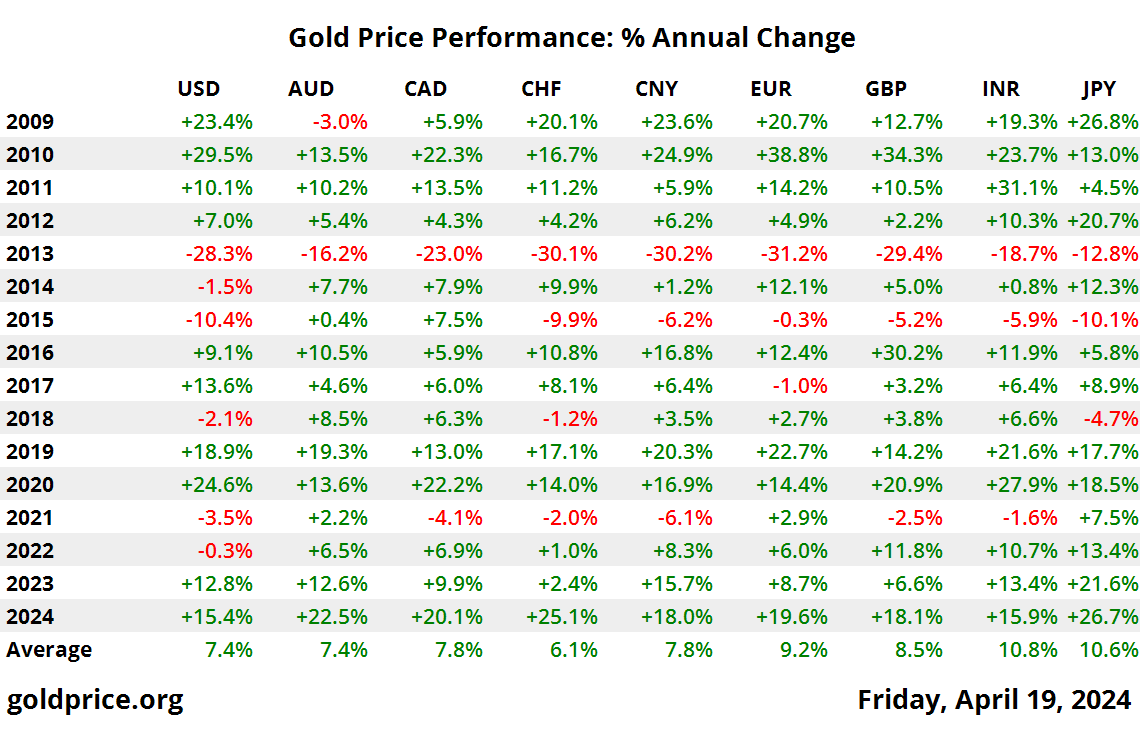
This could explain why gold has now reached all time highs in many major currencies around the world and seems to be heading that way in US dollars even as the US dollar itself remains relatively strong thus far. Click here to see how gold has fared against the major global currencies (average annual gain of 9-12% since 2004 with a huge surge across the board in 2019 averaging around 20%).

Will any of this lead to some kind of major reform or reset of the present monetary system? Is it even possible to get the kind of political consensus needed to do some kind of major monetary system reform? Only time will tell us the answers. That is what this blog attempts to monitor. There are many ideas for potential system reform as we have noted here. But there seems to be very little political consensus around any one idea at this time.