Showing posts with label BIS. Show all posts

Sunday, August 30, 2020

BIS Working Paper on Central Bank Digital Currencies

The Bank for International Settlements has published this new work paper on central bank digital currencies. Below is an excerpt from the Conclusion section of the paper and then a few added comments. I added underlines for additional emphasis.

-------------------------------------------------------------------------------------------------------------------------


"This paper has examined the rise of central bank digital currencies, a new payment technology that may soon be available in a number of countries around the world. We have presented a novel CBDC project index (CBDCPI). We have shown that this index is higher in jurisdictions with higher mobile phone usage and higher innovation capacity. Especially retail CBDCs are more likely where there is a larger informal economy, and wholesale CBDCs are more advanced in economies that have higher financial development. We have also noted that CBDC projects differ starkly across countries, both in their motivations and their economic and technical design. Many central banks are pursuing models where a CBDC is a direct claim on the central bank, but with private intermediaries. To better understand these differences, we have zoomed in on three advanced cases, namely those of the People’s Bank of China, Sweden’s Riksbank and the Bank of Canada."

------------------------------------------------------------------------------------------------------------------------
My added comments: Readers will note that this new paper appears to imply that we may be closer to seeing a central bank or banks try to implement some version of a central bank digital currency than has been the case up to now. They specifically mention three "advanced cases" in China, Sweden, and Canada. We do continue to note however, that we still do not see any indication that there is any widespread plan for implementation of some kind of central bank currency very quickly. We see this in the final paragraph of the conclusion section:

"Going forward, events such as the Covid-19 pandemic highlight the value of access to diverse means of payments, and the need for any payment method to be both inclusive and resilient against a broad range of threats, just as cash is (see Auer et al (2020)). While it is difficult to anticipate the range of challenges ahead, central banks will continue to take a long-term view and carefully consider the role of CBDCs in a range of potential future scenarios."

Another point to note in this paper (which we see over and over again in similar papers on this topic) is the statement that none of these central bank digital currencies are intended to replace cash. Here is that statement from the conclusion:

"Yet our overview has also shown some key common features. In particular, none of the designs we survey is intended to replace cash; all are intended to complement it."

There is no doubt that many are suspicious that central banks do want to create a "cashless society" and it is true that a cashless society would make it easier for central banks and governments to track financial  transactions and would be a potential threat to financial privacy for the individual. However, no study I have seen on this topic has ever included a stated goal of the elimination of the use of cash and many studies done by central banks specifically state the it is not possible to eliminate cash nor desirable for a variety of reasons. Most studies talk about a central bank digital currency as a complement to cash just as this paper does.

Overall, we still do not see any indications that there is a broad movement underway by central banks to quickly implement central bank digital currencies. A few may be closer to trying something. The Federal Reserve in the US has announced plans to enter in a multi year study on central bank digital currencies with no decision made yet on how it might be implemented or even if it would be implemented. Central banks consistently mention a number of significant potential problems and obstacles to implementation including the impact on commercial banks, the impact on personal financial privacy, and various potential cyber security issues. In addition, problems trying to use blockchain in any system that needs to process millions of transactions quickly is also a problem. 

In summary, there is nothing in this new BIS work paper that would suggest anything is different than we just reported in this recent article on this topic. If and when any major western central bank actually moves to implement some kind of central bank digital currency, it does not appear they will making any kind of major change to the existing monetary system. These currencies would just be another version of their existing national currencies which are mostly "digital" now anyway rather than actual physical notes. 

It would be a significant change in our view here if central banks allowed individual citizens to hold bank accounts directly with the central bank to hold their national currency in whatever form it might take (CBDC or otherwise). We will watch for any change like that over time. 

Monday, August 17, 2020

Former Fed Chiefs Discuss the Policy Response to the COVID Pandemic

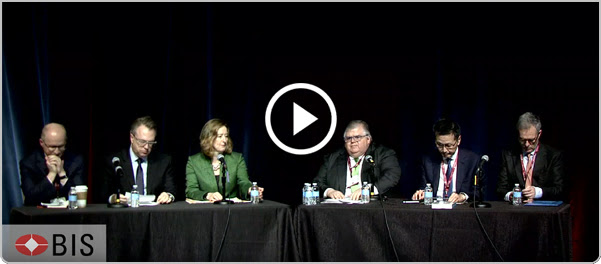
Recently, the Yale University Program on Financial Stability hosted a panel discussion that included former Federal Reserve Chiefs Ben Bernanke and Janet Yellen along with Agustin Carstens (current head of the Bank for International Settlements) and Tharman Shanmugaratnam.(Senior Minister of Singapore). The panel was asked to talk about the overall policy response around the world (and especially at the Federal Reserve) to the economic disruption created by the  COVID-19 pandemic.


These are worthwhile discussions to listen to because you have both current officials and former officials talking openly about the problems and issues they face trying to maintain financial stability. In a discussion like this, former officials may be able to speak more openly than they could while in their official positions. In this discussion, I felt like that did happen and especially in the Q&A session near the end. You can watch the full discussion here and below as well. Further below I have featured a key question that was asked and a summary of the replies from both Janet Yellen and Ben Bernanke to illustrate the kinds of concerns they have about the sustainability of our present system. That is of course something we try to monitor here.

---------------------------------------------------------------------------------------------------------------------


-------------------------------------------------------------------------------------------------------------------------
My added commments: I would call your attention to a specific question raised at the 1:10 and 36 second mark of this video. Here is the question that was asked by a former employee at the Fed who worked for both Janet Yellen and Ben Benanke:

I would be interested to hear Ben and Janet's views on whether these higher US debt to GDP ratios are a problem. With low interest rates, it is not obvious (that it will be a problem). I am interested in a loss of confidence, but is that an issue for countries that borrow in their own currency and with their own central bank (like the US with the Fed)?

The replies to this question from Ben Bernanke and Janet Yellen are worth your time to hear. This question is right at the heart of the issues we cover here and talk about all the time. I would note that this question comes directly from a former Fed employee. Let that sink in. The question is about the potential for a loss of confidence in our present system due to excessively high debt to GDP ratios. I doubt he asked the question thinking there is no such potential

I will let you listen to the replies rather than try to summarize them; but I can say that both former Fed chiefs agreed that there are major challenges facing our present system and that even a best case scenario in the US might look like how things have been in Japan for many years (stagnation with long term suppressed interest rates). I don't think either of these former Fed officials would even address a question like this while they were in their official positions, but were willing to talk honestly and openly here about their concerns about the risks to our current system in this discussion. 

This is why we try on this blog to encourage as many people as we can reach to understand that these issues are very important to all of us and will absolutely impact all our daily lives. 

How these problems are identified and resolved will impact us and we need to understand the issues as best we can to be able to be more informed voters and to prepare for any potential future adverse conditions that come our way if proposed solutions to our problems don't work as intended or if problems arise unexpectedly that were not foreseen.
-----------------------------------------------------------------------------------------------------------------------
Added note for readers (8-21-2020): I will have two articles coming up in the next couple of weeks. The first will allow readers to take an in depth look at the pros and cons of central bank digital currencies (CBDC's). Later in early September, I will offer up an article that asks if we are headed into a wild 60 day ride heading into the Novermber US elections? Nothing should surprise us during that 60 day interval of time.

Tuesday, July 21, 2020

BIS Innovation Hubs to Expand in Europe and North America

We have reported on central bank efforts to study innovations such as central bank digital currencies for some time. We have noted that movement by central banks tends to be very gradual and that most are very reluctant to make major changes very quickly. 


This trend continues, but we do see more efforts by central bank friendly organizations such as the OMFIF and the Bank for International Settlements to try and spur some innovation in fintech. Below are some excerpts from a recent new BIS announcement that it will open new innovation hubs in Europe and North America. I added underline below for added emphasis.

------------------------------------------------------------------------------------------------------------------------

"The Board of the Bank for International Settlements (BIS) today announced the expansion of the BIS Innovation Hub with the establishment of new Hub centres across Europe and in North America in cooperation with member central banks.

In the next two years, the BIS will open centres in collaboration with the Bank of Canada (Toronto), the Bank of England (London), the European Central Bank/Eurosystem (Frankfurt and Paris) and four Nordic central banks (Danmarks Nationalbank, the Central Bank of Iceland, the Central Bank of Norway and Sveriges Riksbank) in Stockholm. The BIS will also form a strategic partnership with the Federal Reserve System (New York)."


Statement From BIS General Manager Agustin Carstens:


"The BIS Innovation Hub is an investment in the future of central banking and the financial system. These new centres will expand our reach significantly and help create a global force for fintech innovation."


Click here to find the press release


------------------------------------------------------------------------------------------------------------------------
Added note: The BIS also releases its 2020 Annual Report which you can find here. The report this year recaps the massive central bank efforts around the world to respond to the economic slow down caused by the COVID-19 pandemic. The question going forward is what will be the longer term impact of the massive liquidity injections on systemic stability. This topic will be hotly debated in the coming months and years.
---------------------------------------------------------------------------------------------------------------------

Meanwhile ---

Unrelated news note: This news came out yesterday on King World News which covers the precious metals markets. Eric Sprott, a well known as a major precious metals investor, has apparently filed notice that he intends to acquire $1.5 Billion worth of physical silver. If so, this comes when there is already a tight market for actual physical silver. It is unlikely that he could source this much silver very quickly even if he is willing to pay somewhat higher prices for it. Mr. Sprott did mention his intention to acquire physical silver in one of his recent weekly podcasts, but did not indicate the amount. This filing will probably allow him to buy the silver over time and may put a demand floor under the silver market until he completes this purchase, assuming he raises the full $1.5 Billion. This agreement I found dated back in 2018 which sounds similar covered a 25 month time frame. So, this is a market you should keep an eye on to see if his physical silver buying increases demand enough to move the silver price higher in the weeks and months ahead. Update: Here is the new filing which confirms the time period will cover the next 25 months as was the case with the previous filing. This appears to be a time extension from the prior filing allowing the trust to buy up to $1.5 Billion in physical silver over that time frame.

Saturday, February 15, 2020

BIS Update - Central Bank Digital Currencies

In the recent BIS (Bank for International Settlements) monthly update, they have several articles dealing with the status of central bank digital currencies. Below I have pasted in this recent update.

-------------------------------------------------------------------------------------------------


February 2020

The green swan 

How should central banks preserve financial stability in the age of climate change?

Central bank digital currencies survey 

Central banks are doing extensive work on digital currencies, and a small number indicate that they are likely to issue one soon.

Policy responses to fintech

FSI Insights paper provides a cross-country overview of policy responses to fintech developments.

Monetary policy frameworks

At an American Economic Association panel organised by the BIS, policymakers discuss whether monetary policy frameworks are still adequate to cope with the challenges central banks are currently facing.

Creating a credible and trusted digital currency

Benoît Cœuré takes part in a panel discussion on the likelihood of a trusted global digital currency and what trends could shape its future.
More BIS publications 

Statistics: Cross-border bank lending accelerates
Global cross-border bank lending grew by 9% year on year at end-September 2019.

Announcement: BIS expands membership
The BIS invites the central banks of Kuwait, Morocco and Vietnam to become members and increases emerging market representation in key committees.

Statistics: US dollar credit outside the US expands
Dollar credit to non-bank borrowers outside the US grew by 5% year on year at end-September 2019.

Saturday, October 19, 2019

"Digital Currencies" Innovation - Is Anything Significant Really Happening?

This blog has covered this topic extensively over the years and has monitored events related the potential for so called "digital currencies" (either privately issued or issued by central banks) to make some kind of significant impact on the current monetary system. 


Now Bloomberg has published this article "Fed Drags Feet as Digital Money Challenges Central Banks" that implies that the IMF is concerned that central banks are falling behind the innovation curve and that "it is just a matter of time before we see massive disruption" according to Tobias Adrian of the IMF. 


Readers here know that we have been reporting for some time that the reality is that there is no indication that any kind of significant new "digital money" innovation that could shake up the existing monetary system is on the near term horizon. Instead, we have steadfastly reported that any changes we do see are more likely to be very gradual and incremental over long periods of time unless some kind of new major financial crisis disrupts the present monetary system.

The first thing to note here is that the money we have now issued by the Fed and other central banks is already "digital money" for the most part. So the term "digital currency" being used to imply something new and innovative is arriving can be misleading. Usually, it is actually the ledger system used to record and track the transactions of the money that is really being talked about which is where things like "blockchain" enter the picture. But even there, there is no indication at this time that central banks are ready to suddenly plunge into using a blockchain ledger system on any kind of major scale. Honestly, what we see is a lot of use of buzz words and some hype, but not very much actual innovation or major changes so far to our present system. 

However, I encourage readers not to just take my word for this analysis. I have often mentioned that I do get input from leading experts on these kinds of issues and that my analysis is mostly based on the credible information I get from these sources. 

Robert Bell (CEO of KlickEx), is one example of these kinds of high credibility sources. Robert does not have to speculate on these kinds of issues because he lives it every day and is one of the leading experts in the world on payment systems and the related technologies used to operate them. Robert has worked with many central banks and met with institutions like the IMF and BIS to discuss these kinds of issues over the years. He was kind to do an interview for this blog and has provided very valuable input here over the years based on his real world experiences. When Robert tells me what is really going on around the world, I simply know that I can trust his analysis to be accurate and up to date.

I showed the Bloomberg article linked above to Robert and he was kind to reply with his thoughts on it as a kind of update on things for readers here. Robert was in Washington DC at the time attending the IMF and World Bank fall meetings.

Here is what he said in his email reply in regards to anything significant happening any time soon related to "digital money"

"As far as real systemic change... There's nothing on the cards for the monetary system. The digital services spoken of (in the Bloomberg article) will not change anything fundamental, and the IMF and BIS are even further behind where most central banks are. 

The central banks will implement real time slowly, and banks will reduce cross border prices slowly. 

Swift and their GPI project is already doing this work, but banks are taking a long time to reduce prices, that's all. 

Open Banking, is speeding things up a bit, but not much."    ---- Robert Bell (KlickEx)

----------------------------------------------------------------------------------------------------------------------------------------------
My added comments: Readers sometimes wonder how I am able to offer analysis on these issues with my having no personal background in banking or macro economics. The answer is simple. I get input from highly credible sources who are experts in their field like Robert Bell. Usually, their input and insights are right on target. I see that borne out over time over and over again. 

Many times they prefer I do not directly attribute quotes in their names which I honor. In that case, I try my best to summarize the information for readers without attributing it to any specific expert. But I do want to clearly credit them for helping to greatly improve the analysis offered here and the reason why we have been able to correctly predict that despite constant articles that some kind of major change is about to happen to disrupt the current US dollar based monetary system; the reality has been slow and gradual change as we have been reporting here for some time.

If I do hear anything to change that analysis, I will certainly let readers know. However, it is more likely that if something does quickly arise to disrupt the present system, none of us will really know much ahead of time as Jim Rickards has said for many years. There are always potential risks to the current system and we have documented many of them here, but those running the system are not looking to make sudden major changes. They prefer stability and for any changes to be gradual over time. The US Fed in particular, moves very slowly and cautiously.

Wednesday, October 16, 2019

BIS Paper on the Impact of Central Bank Stimulus Policies

The Bank for International Settlements publishes many research reports and also posts articles on its web site by central bankers from around the world. In this case, the BIS has posted a paper written by Phillip Lowe (Reserve Bank of Australia) and Jacqueline Loh (Monetary Authority of Singapore). Looking back over the last ten years they discuss the impact of central bank stimulus programs on the financial markets. 


Below is the first part of the Executive Summary from this paper. I added some bolding in spots for additional emphasis. You can find the full text of the paper here.

------------------------------------------------------------------------------------------------------------

Executive summary

"Central banks expanded their balance sheets on an unprecedented scale in response to the global financial crisis (GFC) and its aftermath. To address financial market dislocations and the limitations of interest rate policy as rates approached their effective lower bound, many central banks introduced special lending programmes, often followed by large-scale asset purchase programmes.

The scale of these programmes has naturally given rise to concerns about their impact on market functioning, prompting central banks to take steps to mitigate potential adverse consequences. This report prepared by a Markets Committee (MC) study group reviews the accumulated experiences and associated policy implications. It examines how the design and execution of balance sheet expansion affected market functioning, in particular, the ability of market participants to adjust positions efficiently, and whether asset prices have promptly and reliably responded to information.

The report adds to the literature by providing a systematic cross-country perspective on the effects on market functioning and related policy options. It draws on a central bank survey, analysis conducted by the study group, and a review of the available academic and policy literature. The report complements a parallel CGFS study, which reviews more broadly the effectiveness of, and lessons from, central banks’ use of unconventional policy tools.

The study group found that central bank balance sheet expansion, especially in early phases, had predominantly positive effects on market functioning. In particular, during periods of heightened illiquidity, emergency lending programmes helped ease severe funding market strains, while purchases of bonds with outsized risk premia tended to improve their underlying liquidity. Negative effects sometimes arose, but rarely tightened financial conditions materially, in part because of mitigating actions taken by policymakers. While adverse effects have often been transitory, they can have an enduring impact when policies are in place for a prolonged period.

Negative effects on market functioning have tended to be associated with elevated asset scarcity, in particular when central bank purchases or securities holdings were particularly large in relation to issuance or outstanding amounts. Scarcity at times has led to deterioration in bond liquidity metrics and increased repo specialness, although these effects were often short-lived. Declines in market making and reduced investor participation were reported in some markets, in particular where policies were in place for an extended period of time. Hence, the consequences for market functioning may not be fully evident until balance sheets normalise.

The expansion of central bank balance sheets produced sharp increases in bank reserves, contributing to a significant decline in interbank reserves trading activity. However, activity in wholesale money markets has remained robust, and central banks have kept a sufficient degree of control over short-term interest rates. 

The report documents that central banks were able to avert or attenuate side effects from balance sheet expansion on market functioning by adopting a range of mitigation strategies. These strategies were often embedded in the design of the programmes themselves, such as purchase protocols to exclude securities temporarily in high demand or to cap central bank ownership shares of individual bonds. Transparency and clear communication limited asymmetric information and supported predictability, while maintaining margins of flexibility to allow central banks to adjust the pace, timing or volume of purchases in response to changes in prevailing market conditions. Finally, central banks adopted measures to alleviate scarcity effects, such as securities lending programmes.

As experience with expiring lending programmes and shrinking balance sheets has been more limited, conclusions regarding the impact on market functioning are more tentative. However, preliminary evidence suggests that steps can be taken to mitigate any negative side effects from the expiry of lending programmes (such as bank fragility), and cutbacks in securities holdings (such as diminished trading and inventory capacity among securities dealers), including by adhering to the general principles of gradualism and predictability."


------------------------------------------------------------------------------------------------------------------
Added note: The Financial Times published this article quoting the BIS as saying that the central bank stimulus programs have produced "negative side effects". The FT titled their article:


The introductory paragraph to the FT article says that "the unprecedented growth in central banks' balance sheets since the financial crisis has had a negative impact on the way in which financial markets function, according to a new report from the Bank for International Settlements."


Sunday, September 22, 2019

BIS Issues Reports on Blockchain Regulation and Stablecoins

This blog has followed the emergence of Bitcoin/Blockchain/Cryptocurrencies/Stablecoins for some time to watch for any indications that any of that may have significant impact on the current monetary system. While a lot of activity has taken place in the arena, so far there has been no significant impact on the present monetary system in our view here. As the old saying goes, "don't mistake activity for achievement".


However, it is pretty clear that the announcement of Project Libra by Facebook has gotten the attention of monetary officials around the world (as we noted in this recent article) This is probably because Facebook has the resources and potential user base to actually make some kind of more significant impact if Project Libra comes to fruition as they have vaguely described it. We have covered that here as well.


The Bank for International Settlements seems to be keeping sort of a wary eye on all this activity and has been busy trying to put together some kind of plan to deal with the issues related to non state sponsored forms of would be money. Below are links to two recently released reports that may be of interest with some excerpts from each one. (underlines were added for emphasis) Further below are a few added comments.

-------------------------------------------------------------------------------------------------------------------------

Embedded supervision: how to build regulation into blockchain finance   (full text)

Abstract

"The spread of distributed ledger technology (DLT) in finance could help to improve the efficiency and quality of supervision. This paper makes the case for embedded supervision, ie a regulatory framework that provides for compliance in tokenised markets to be automatically monitored by reading the market's ledger, thus reducing the need for firms to actively collect, verify and deliver data. After sketching out a design for such schemes, the paper explores the conditions under which distributed ledger data might be used to monitor compliance. To this end, a decentralised market is modelled that replaces today's intermediary-based verification of legal data with blockchain-enabled data credibility based on economic consensus. The key results set out the conditions under which the market's economic consensus would be strong enough to guarantee that transactions are economically final, so that supervisors can trust the distributed ledger's data. The paper concludes with a discussion of the legislative and operational requirements that would promote low-cost supervision and a level playing field for small and large firms."

"Senior officials from public authorities worldwide met in Basel on Monday (9-16-2019) to discuss policy and regulatory issues posed by the emergence of "stablecoin" initiatives backed by financial institutions and large technology companies.
The conference was hosted by the Bank for International Settlements (BIS), and included presentations by Fnality Internationalthe Libra Association and JP Morgan.
"A key part of assessing new initiatives is to understand the details," said Agustín Carstens, General Manager of the BIS. "When such initiatives cross national borders, it's important for regulators to coordinate and come to a common understanding."
The event was convened by the Group of Seven working group on stablecoins chaired by Benoît CÅ“uré, Chair of the BIS-hosted Committee on Payments and Market Infrastructures. The group will produce a final report on its work by mid-October.
"As a new technology, stablecoins are largely untested, especially on the scale required to run a global payment system," said Mr Cœuré. "They give rise to a number of serious risks related to public policy priorities. The bar for regulatory approval will be high."
-----------------------------------------------------------------------------------------------------------------------
My added comments: As this whole industry has emerged and progressed, central banks and organizations like the IMF and the BIS have clearly been struggling to keep up with rapid changes in technology that are taking place. It is clear that there is deep concern that various attempts to disrupt the existing state sponsored currency system operated by central banks and the private banking system may allow for something to eventually rise up and challenge the existing system before it is well understood by monetary authorities. The response we usually see from these authorities is usually along the lines that change and progress can be good, but not any kind of change that bypasses the regulatory control of those running the present system. 
So far there has not been any need for them to be too concerned because the entire combined universe of Bitcoin/blockchain/cryptocurrency/stablecoins has such a tiny market share that it has posed no serious threat to the status quo. It seems like Project Libra from Facebook is the first one of these to be taken as some kind of actual potential threat that must be dealt with one way or another. 
At this time, my expectation is that whatever has to be done to prevent anything like Project Libra from posing any kind of serious challenge to the present monetary system will likely be done. While the central banks, IMF, BIS, etc. seem to be starting off kind of behind the curve and have been trying to catch up just to understand the various technologies, they retain the regulatory power to cripple anything that might try to become a serious threat to the status quo. These reports are reminders that regulators won't sit by idly while something arises to threaten the present system.
Once again, as we have written here many times. changing the status quo is extremely difficult. It is unlikely in our view here that any sudden major radical change to the status quo system will take unless a new financial crisis so disrupts the present system that it cannot function. That is what we advise readers to monitor over time. All the rest is probably just a lot of activity, but not much achievement that would significantly change things.
------------------------------------------------------------------------------------------------------------------
Added note: The BIS also publishes this speech by a member of the Executive Board of the ECB which summarizes where things stand with digital currencies, etc. Again, in this speech, we see not much change on the immediate horizon as monetary officials continue to try and figure out which way to proceed. Do they just heavily regulate private efforts to create new payments systems and forms of money or do they push forward with their own state sponsored versions?

Saturday, July 6, 2019

Claudio Borio (BIS) - On Money, Debt, Trust, and Central Banking

One of our goals here is to try and provide links to information and resources that discuss the concept of money and monetary systems. On the one hand, most people probably don't think much about a discussion about "What is Money" or "What Monetary System Works Best". In the US for example, most people just think of the US dollar as their money and the monetary system is based on the US dollar and run by banks and the Federal Reserve. On the other hand, a growing number of people are interested in learning more about these kinds of issues.


In this recent article appearing in the Cato Journal by Claudio Borio, he takes a deeper dive into this topic. The article is a bit technical in spots, but also includes some time honored core principles that are critical to anything that wants to viewed as money; and monetary systems that attempt to administer the issuance and exchange of money to conduct business activity. Below are a few excerpts followed by the Conclusion Section of the article. I added the underlines below for additional emphasis.


(Claudio Borio - Head of the Monetary and Economic Department - BIS)
------------------------------------------------------------------------------------------------------------------

"My focus will be on the monetary system, defined technically as money plus the transfer mechanisms to execute payments. Logically, it makes little sense to talk about one without the other."

. . . . 

"First, two properties underpin a well-functioning monetary system. One, rather technical, is the coincidence of the means of payment with the unit of account. The other, more intangible and fundamental, is trust. In fact, a precondition for the system to work at all is trust that the object functioning as money will be generally accepted and that payments will be executed. But a well-functioning system also requires trust that it will deliver price and financial stability."

. . . . 

"Society needs an institutional infrastructure to ensure that money is widely accepted, transactions take place, contracts are fulfilled and, above all, agents can count on that happening. Even the most primitive communities require generally agreed on, if informal, norms and forms of enforcement. Putting in place the corresponding supporting institutions — or institutional technology — in a way that ensures trust is a major challenge. And the challenge naturally becomes more complex as societies develop."

. . . .

"At the very least, a well-functioning monetary system has two properties. 

First, technically, it will exploit the benefits of unifying the means of payment with the unit of account. The main benefit of a means of payment is that it allows any economy to function at all. "

. . . .

"Second, and more fundamentally, a well-functioning monetary system will enjoy the solid trust of participants. To be sure, trust that people will accept the corresponding instrument as a means of payment and that the transfer will be effective are absolutely necessary for the system to function at all. But a well-functioning system requires more. It requires trust that the value of the instrument will be stable in terms of goods and services, as fluctuations generate uncertainty, and trust that its value will not change strongly in one direction or the other."

. . . .

"A new and controversial payment scheme — cryptocurrencies — illustrates some of the difficulties in generating trust through a fully decentralized system that does not piggy-back on existing institutional arrangements. This is so quite apart from the issues concerning scalability, finality, and incentives to verify, discussed in detail in this year’s BIS Annual Economic Report (BIS 2018).28 The above analysis points to another problem that can undermine trust, as also mentioned in the report: the lack of elastic supply. Hence the cryptocurrencies’ extreme price volatility: changes in demand are fully reflected in the price. The volatility undermines the cryptocurrency’s role as a unit of account and as a means of payment. Not surprisingly, prices are still quoted and sticky in terms of national currencies."

"The problem cannot easily be solved. A fully unbacked currency in elastic supply will not succeed in gaining the necessary trust. Alternatively, seeking to tie it to the domestic currency would require some agent to arbitrage in possibly unlimited quantities between the two, just as when central banks seek to keep exchange rates stable. And simply backing it with a sovereign asset or means of payment on a demand-determined basis would not do either. Not only would it defeat the purpose of having a cryptocurrency in the first place, as it would explicitly piggy-back on sovereign money. As in the case of any mutual fund unbacked by a supply of liquidity and a lender of last resort, it would also be vulnerable to runs (breaking the buck) — the equivalent of having to break the promise of convertibility. Moreover, in all probability it would not to be profitable without taking on significant risk to pick up yield, which would increase the probability of such a run."

. . . .

"The previous analysis suggests that the concepts of price and financial stability are joined at the hip. They are simply two ways of ensuring trust in the monetary system. Inflation, deflation, and price volatility induce instability in the value of money — and its close cousin, debt — in terms of goods and services, undermining its means-of-payment (and store-of-value). Financial instability effectively undermines it through the threat and materialization of default, which can bring the payments system to a halt when bank deposits are involved. Price and financial instability amount to broken promises."

. . . .

"Finally, studies indicate that financial booms tend to misallocate resources, not least because too many resources go into sectors such as construction, which depresses productivity growth persistently once the boom turns to bust (Borio, Disyatat, and Zabai 2016 and references therein). Furthermore, a large amount of empirical work indicates that the financial busts that follow booms may depress output for a long period, if not permanently. It is hard to imagine that interest rates are simply innocent bystanders. At least for any policy- relevant horizon, if not beyond, these observations suggest that monetary policy neutrality is questionable."

. . . .

"Strong monetary system anchors are crucial. As argued in more detail elsewhere, putting them in place requires action on two fronts. It calls for effective regulation and supervision. This must be so both in relation to banks (and other financial institutions) assessed on a stand-alone basis (the so-called microprudential perspective) and with respect to the system as a whole (the so-called macroprudential perspective). And it calls for monetary policy regimes that secure long-term price stability while taking advantage of any room for maneuvering to respond to financial stability threats."

. . . .

Conclusion


"The monetary system is the cornerstone of an economy. Not an outer facade, but its very foundation. The system hinges on trust. It cannot survive without it, just as we cannot survive without the oxygen we breathe. Building trust to ensure the system functions well is a daunting challenge. It requires sound and robust institutions. Lasting price and financial stability are the ultimate prize. The two concepts are inextricably linked, but because the underlying processes differ, in practice price and financial stability have often been more like uncomfortable bedfellows than perfect partners. The history of our monetary system is the history of the quest for that elusive prize. It is a journey with an uncertain destination. It takes time to gain trust, but a mere instant to lose it. The present system has central banks and a regulatory/supervisory apparatus at its core. It is by no means perfect. It can and must be improved. But cryptocurrencies, with their promise of fully decentralized trust, are not the answer.
Paraphrasing Churchill’s famous line about democracy, “the current monetary system is the worst, except for all those others that have been tried from time to time.”

---------------------------------------------------------------------------------------------------------------------

My added comments: As you can see from the underlined portions of the text above, it is critical that anything that wants to be viewed as money has the widespread trust of the population in general. Without that, it is doomed to failure eventually. This seems obvious, but examples of projects and monetary systems that failed to obtain this vital trust abound both in history and around us today. 

I encourage readers to read the full article by Claudio Borio. It is an analysis of how the present system values the public trust in the monetary system and the ways it attempts to maintain that trust. It is clear when you read this article that monetary officials understand that if they lose general public trust in money and the monetary system, it is very difficult to get it back as history has shown many times.

Also, another thing I have learned is that if you want to offer up anything as money with hope of achieving wide scale adoption by the general public, you must be able to convince the public it is trustworthy above all else. You can have the greatest theoretical concept for money or a monetary system ever devised by man, but if you cannot convince the public at large to trust it, it won't matter and it will fail eventually.

Added notes: The comments in this article about cryptocurrencies are interesting in light of the announcement by Facebook to launch the Libra. The second paragraph above related to cryptocurrencies seems to me to be directly pointed at something like the Facebook Libra even though the Libra plans to have full fiat currency backing for each coin. As I read it, that paragraph suggests Libra will just be "piggybacking" on existing national currencies and that it could be vulnerable to a bank run under some conditions.

Also, the BIS has just issued a new report that looks at the pros and cons of "Big Tech" like Facebook entering into the financial services industry.