Showing posts with label Robert Bell. Show all posts

Saturday, October 19, 2019

"Digital Currencies" Innovation - Is Anything Significant Really Happening?

This blog has covered this topic extensively over the years and has monitored events related the potential for so called "digital currencies" (either privately issued or issued by central banks) to make some kind of significant impact on the current monetary system. 


Now Bloomberg has published this article "Fed Drags Feet as Digital Money Challenges Central Banks" that implies that the IMF is concerned that central banks are falling behind the innovation curve and that "it is just a matter of time before we see massive disruption" according to Tobias Adrian of the IMF. 


Readers here know that we have been reporting for some time that the reality is that there is no indication that any kind of significant new "digital money" innovation that could shake up the existing monetary system is on the near term horizon. Instead, we have steadfastly reported that any changes we do see are more likely to be very gradual and incremental over long periods of time unless some kind of new major financial crisis disrupts the present monetary system.

The first thing to note here is that the money we have now issued by the Fed and other central banks is already "digital money" for the most part. So the term "digital currency" being used to imply something new and innovative is arriving can be misleading. Usually, it is actually the ledger system used to record and track the transactions of the money that is really being talked about which is where things like "blockchain" enter the picture. But even there, there is no indication at this time that central banks are ready to suddenly plunge into using a blockchain ledger system on any kind of major scale. Honestly, what we see is a lot of use of buzz words and some hype, but not very much actual innovation or major changes so far to our present system. 

However, I encourage readers not to just take my word for this analysis. I have often mentioned that I do get input from leading experts on these kinds of issues and that my analysis is mostly based on the credible information I get from these sources. 

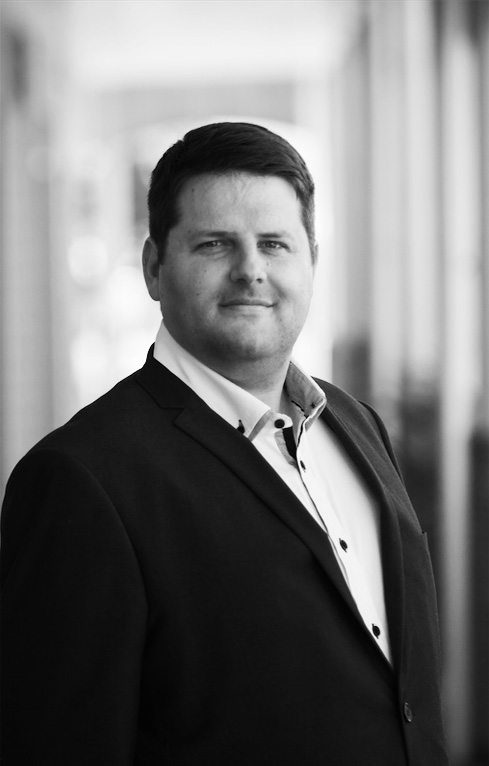
Robert Bell (CEO of KlickEx), is one example of these kinds of high credibility sources. Robert does not have to speculate on these kinds of issues because he lives it every day and is one of the leading experts in the world on payment systems and the related technologies used to operate them. Robert has worked with many central banks and met with institutions like the IMF and BIS to discuss these kinds of issues over the years. He was kind to do an interview for this blog and has provided very valuable input here over the years based on his real world experiences. When Robert tells me what is really going on around the world, I simply know that I can trust his analysis to be accurate and up to date.

I showed the Bloomberg article linked above to Robert and he was kind to reply with his thoughts on it as a kind of update on things for readers here. Robert was in Washington DC at the time attending the IMF and World Bank fall meetings.

Here is what he said in his email reply in regards to anything significant happening any time soon related to "digital money"

"As far as real systemic change... There's nothing on the cards for the monetary system. The digital services spoken of (in the Bloomberg article) will not change anything fundamental, and the IMF and BIS are even further behind where most central banks are. 

The central banks will implement real time slowly, and banks will reduce cross border prices slowly. 

Swift and their GPI project is already doing this work, but banks are taking a long time to reduce prices, that's all. 

Open Banking, is speeding things up a bit, but not much."    ---- Robert Bell (KlickEx)

----------------------------------------------------------------------------------------------------------------------------------------------
My added comments: Readers sometimes wonder how I am able to offer analysis on these issues with my having no personal background in banking or macro economics. The answer is simple. I get input from highly credible sources who are experts in their field like Robert Bell. Usually, their input and insights are right on target. I see that borne out over time over and over again. 

Many times they prefer I do not directly attribute quotes in their names which I honor. In that case, I try my best to summarize the information for readers without attributing it to any specific expert. But I do want to clearly credit them for helping to greatly improve the analysis offered here and the reason why we have been able to correctly predict that despite constant articles that some kind of major change is about to happen to disrupt the current US dollar based monetary system; the reality has been slow and gradual change as we have been reporting here for some time.

If I do hear anything to change that analysis, I will certainly let readers know. However, it is more likely that if something does quickly arise to disrupt the present system, none of us will really know much ahead of time as Jim Rickards has said for many years. There are always potential risks to the current system and we have documented many of them here, but those running the system are not looking to make sudden major changes. They prefer stability and for any changes to be gradual over time. The US Fed in particular, moves very slowly and cautiously.

Sunday, September 2, 2018

Hidden Gems from Experts on Monetary Policy and System Reform

Over the past few years this blog has endeavored to explore the potential for monetary system change that could impact the daily lives of all us. This whole topic arose due to the last great financial crisis of 2008. That crisis took most of the mainstream experts by surprise and resulted in a mad scramble by central banks (with some assistance from the IMF) to stabilize the current monetary system.


Now we are a decade removed from 2008. There is still much debate about whether or not the unprecedented and experimental monetary policies employed by central banks around the world have been successful or not.


On the one hand, they did manage to prevent the system from imploding and the world from falling into complete chaos economically. Some view that as success. On the other hand, skeptics and critics say that the policies adopted only delayed the crisis and the asset bubbles that have arisen from those policies insure that when the next crisis does arrive, it will be much bigger than 2008 and likely will take out the present monetary system during the fallout.


All of this is why this blog was launched. The average person who is simply working hard to make a living and provide for a family does not have the time and the expertise to try and keep up with all the various views on the stability of the present system or the odds for a new major crisis. Beyond that, it takes time to try and understand the ideas and proposals out there to fix the mess if we do get "the big one" that so many people from all across the spectrum of views still think is coming some day.


This blog was started in an effort to better understand these issues and to try and assess what the risks to the present system are and to learn what ideas and proposals exist to "fix the mess" if and when we do get the mess. Along the way, an opportunity arose to get direct input from some of the leading experts in the world on this whole situation. That input has been documented here over the last few years, but time has passed. The articles are now what I would call "hidden gems" of information that most people probably won't know about, but I think would find interesting.


This article reviews some of those "hidden gems" so that new readers will know about them and because the input given is still quite relevant today. Below is a summary of some of these gems and bit of background about the experts who offered them.

--------------------------------------------------------------------------------------------------------------------

Jim Rickards - Jim is probably the most well known expert who has managed to reach the largest audience of people on these issues. Jim has maintained for years that when the next big financial crisis arrives (and he believes it will arrive), that it is likely that a proposal to replace the US dollar with the SDR issued by the IMF will be put forward to "fix the crisis". This thesis is what started the effort here to learn as much as possible about the SDR and any proposals on the table to use it as the new global reserve currency. Here are some articles from this blog where Jim offered direct input for readers here:


Dr. Warren Coats (former IMF - Head of the SDR Division) - There has been lots of discussion in recent years about the prospects for the SDR to eventually become the new global reserve currency. As noted above, Jim Rickards has really brought this issue into public view. But what is the SDR? How could it replace the US dollar? My thinking was that if you want to understand the SDR and how it functions, why not just ask one of the leading experts in the world about it? So, that is what we did here. Below are articles featuring Dr. Coats explaining both the SDR and his "Real SDR" proposal to use as a global reserve currency. You simply are not going to find a better expert on the SDR than Dr. Coats. Here are some articles with his direct input for readers here:


Robert Pringle  - (former Director for the Group of 30) - Robert Pringle is to central banking as Dr. Warren Coats is to the IMF and the SDR. One of the leading experts in the world without question. As Founder of Central Banking publications, he knows and has known central bankers from around the world and written extensively on the subject. After the 2008 crisis Robert, like many, had concerns about policies being implemented to deal with the crisis. He published his book The Money Trap to express his thoughts on the problem and his ideas for solutions. He has been kind to share his wealth of experience and knowledge here from time to time. Here are some articles with his direct input for readers here:


Robert Pringle and Allan Meltzer debate monetary system reform - Part I  --- Part II


Dr. Lawrence White - We happen to share the same name, but Dr. White is the expert on economics and monetary policy. He is a Senior Fellow at the Cato Institute and Professor of Economics are George Mason University. He is also widely respected as a student of the classical gold standard. Here is an article where he pointed me to his work on the gold standard:


John D. Mueller - a blog reader connected me to John D. Mueller. Mr. Mueller is the Lehrman Institute Fellow in Economics at the Ethics and Public Policy Center in Washington DC. He offered some direct input for readers on the gold standard and on Lewis Lehrman:


Dr. Judy Shelton - Dr. Shelton is currently US Director for European Bank for Reconstruction and Development (EBRD) having accepted that appointment from President Trump. She has long been an advocate for monetary system reform and also has spoken favorably towards the classical gold standard. She recently offered her thoughts on the potential for monetary system reform to readers here in the article linked just below and recently called on President Trump to work towards a new international monetary system:


Keith Weiner - CEO of Monetary Metals - Keith has proposed a new kind of gold standard that he calls an "Unadulterated Gold Standard". We covered it here and he added some additional thoughts for readers on why he thinks it is realistic that we might see something like this emerge in the future. Keith is also working with the State of Nevada on the idea of issuing gold backed bonds payable in actual gold.


Robert Bell, Founder and CEO of KlickEx - Robert Bell is a widely respected expert on Fintech innovation as it relates to both central banking and the potential to use technology to reform the monetary system. In the fall of 2017, he announced that he was partnering with IBM and Stellar to implement what he called the first institutional scale blockchain based payments system in the South Pacific. Robert has provided ongoing input and acted somewhat as a mentor over the past few years. He has shared his knowledge and experience picked up directly on the front lines of what his happening currently with regards to Fintech. Here is a recent interview he did for readers here with thoughts on the both the current monetary system and what its future may look like:


------------------------------------------------------------------------------------------------------------------------
My added comments: There you have it. Direct input from experts on the monetary system we have and ideas on how it could be reformed or even replaced eventually. I will add that I have also gotten of lot of direct input and feedback by email from these experts not intended for use in a public article, but very valuable to me in helping to understand these issues. Hopefully, it has helped me improve the quality of the information presented here.

There are truly some hidden gems of wisdom and information in these articles from some of the leading experts in the world on the topic of monetary policy and the potential for monetary system reform. I would challenge readers to try and find a better collection of experts on these issues anywhere. I don't think it exists and it is my hope that as many people as possible will find this information and share it with anyone interested. 

Readers who want to explore these idea further should go to our market place of ideas for monetary system reform page. It contains all the articles linked above along with some articles with input from some additional experts. There are articles that take a deeper dive into some of these issues there as well.

-------------------------------------------------------------------------------------------------------------------------
Added note - 9-4-18: Today CNBC runs this article saying the the "top quant" at J.P. Morgan (Marko Kalonovic) is warning that in the next financial crisis we will see:

"Sudden, severe stock sell-offs sparked by lightning-fast machines. Unprecedented actions by central banks to shore up asset prices. Social unrest not seen in the U.S. in half a century." 

Mr. Kolanvic is quoted in this article as saying the chances of such a crisis happening are "low until at least the second half of 2019."

I forwarded this article to one expert to see what he thought about this article. He agreed with the magnitude of the crisis talked about in this article, but felt that no one could predict timing and also that the crisis will be too big for the Fed and other central banks to control. He said there is no reason to assume we are "safe" until the second half of 2019.

Sunday, August 12, 2018

Robert Bell of KlickEx Comments on Monetary System Reform

Readers here know that we have featured New Zealand based KlickEx on the blog several times in the past. KlickEx is on the front lines of innovative technology for cross border payments systems and for technologies that can be used by central banks.


KlickEx Founder Robert Bell is recognized globally as an expert in payments technology and for creative ideas on how to promote financial inclusion in places where it is needed the most (such as the islands of the South Pacific). Robert has also been a great mentor, willing to share his knowledge and experience on the issues we cover here over the past few years.


Robert kindly agreed to do a Q&A style interview for readers here discussing his thoughts on the current status of monetary system reform and its potential for the future. He works with central banks and banks around the world, specializing in real time cross border payments that help promote financial inclusion. 


Last fall he announced a partnership with IBM and Stellar to implement what he described as the first institutional scale payments system to run on a blockchain platform (which we covered here). So he brings us an inside perspective on the latest information available regarding what is happening in Fintech and the potential for monetary system reform globally.


Robert Bell - KlickEx
--------------------------------------------------------------------------------------------------------------------

Q: After the 2008 financial crisis, many people felt that some kind of major reform to the existing US dollar based monetary system was close at hand. In fact, that was the very reason this blog was launched. Why do you think we have not seen any major reform to the global monetary system so far at this point in time?


A: Wow. This is a great question. I was one of the people who wanted to see the reform - very much - as I was inside banking at the time, and was more convinced than most, that banking as we knew it, wasn't as important as people inside the industry believed it was (as it stood then). 

In my opinion, at that time, central banks were sitting on their hands, believing in a set of financial theories that were very incomplete, and as a result,  what we saw was an utter embarrassment to the establishment. The bit I think was worst, was called the Capital Asset Pricing Model, and it had an extremely stupid assumption: That the market knows best. It allowed mathematical proofs to be built on this, and as we know, the market doesn't always know. It's the best we have, but it's almost never correct, otherwise it wouldn't change so much every day.

The danger of this is a complete lack of inherent responsibility to disclose what you know of what you sell. A lack of good faith. And CAPM eventually leads bankers to believe that something is of merit, if someone else will buy it, no matter how bad it is, no questions asked. And others buy things, because math tells them too. It's very dangerous. That led to what was primarily a greed and stupidity crisis. And it was potentially unbounded in scale. It wasn't really anything to do with the structural functioning of the system, but the human institutions that run it, in the back rooms, and the ethics involved on risk and honesty when things are bought and sold. 

When it all fell down, the people managing billions and trillions of dollars of assets allocation based on assumptions that profit alone, and worse still, short term profit, was the sole important measure of virtue, were at fault. A new system of any sort, doesn't change this. A Blockchain doesn't either. People will still find their way in - or worse - sell rubbish claiming to be gold. And that's the problem with "the system": People's desire to short change others as quickly and as comprehensively as they can get away with. And that's nothing to do with computer science.


Q: KlickEx has been at the forefront of Fintech innovation in payments systems as proven by your recent partnership with IBM and Stellar. Do you think that cross border payments system technology will eventually be adapted for use by central banks in reforming the overall monetary system?

A: Yes and no. The systems will be put in place, but it's unlikely that central banks will run it. The issues central banks face here are primarily around jurisdiction; and how to manage conflicts of interest between factions of a super-national governance body is a large body of work that has to be established and maintained. It's what happened in Europe with the  Sovereign Debt Crisis, and it's what happens when Bitcoin Exchanges fail. But countries cannot fail, we don't have that luxury in Developed Markets; else they'd be emerging markets...! 

So the systems end up being owned by banks and then become narrowly focused on providing tools to the biggest banks (SWIFT, CLS), excluding smaller ones. The ones owned by government (FedACH, SEPA) are slow and inefficient and end up ineptly serving the lowest common denominator. The ones in the NGO (non governmental organization) sector lack drive and are often berated by Bank and Government competitors, to the point where good initiatives get lost (e. g. Gates Foundation's MojaLoop) in the same way Government ones do. Exceptions are Visa and Master Card, and China Union Pay, vs American Express. 

To answer the second part of the question, the system isn't necessarily broken, it's just slow. The technology for real time payments has existed for a long time. The technology, like military technology, often takes a decade or more to test and prove and deploy - and can be 30 years old before it goes live, unless in wartime. Banking is similar - it's not about how fast you can go when the trajectory is upwards and exciting, but about how slowly you go downward when the trajectory is negative and terrifying.                                             (note: I added the underline for emphasis)

Q: Do you see a future for private blockchain based cryptocurrencies to evolve into a viable and sustainable alternative to the current monetary system?

A: The key there is cryptocurrency. Blockchain is just another database system, that is almost free to adopt, but increasingly expensive to maintain. We know, a bank will spend a billion dollars on a system that promises to be nearly free in the long term. Blockchain is the opposite. Which makes it perfect for startups. It's brilliantly free to copy, clone or fork, but try and make it run at a billion transactions per second for under a cent per instance, and it is a monumental failure on a scale that the world has never seen (compared to the claims made). It's just lucky that cryptocurrencies have no scale, otherwise the colossal impossibility would be a realised failure. 

The entire market cap of cryptocurrencies, is less than about an hour of what banks transact over morning coffee, day in and day out. Banks have capacity to process more than 10 Quadrillion transactions per year. Cryptocurrencies have so many flaws, that most people don't have the skills to acknowledge or even recognize that...

They just know it's cheap to start, and easy to raise money for it.  That's not to say it's all doom and gloom, but just like any technology, and just like the Blockchain solution we've seen in the Pacific, it's not really what technology is used, but who is using it that is most important. As you've seen with IBM, Stellar, and KlickEx, knowledge over enthusiasm will steer the direction of change in the monetary system going forward, I believe.


Q: Five years from now, do you think the global monetary system will look very different from what it is now or pretty much the same?

A: Very similar. Just faster. There will be less change than moving from Windows95 to Windows2000 - or from Skype to WhatsApp, for the younger generation. Or perhaps a similar difference between the special effects in Hollywood movies between the movies Terminator and Terminator 2. What will noticeably vary is what can be done on top of the existing infrastructure. 

Today's infrastructure is very efficient if you are a large bank. But those efficiencies don't filter down to people (end users). And people are getting a bit sick of being excluded from efficiency. This is our experience - and what we've been working on in the Pacific: taking the long-standing abilities of banks to price and trade foreign exchange, millions of times per second, at fractions of a percent per time, and sharing that with more people.

Q: What else would you like to say to our audience about the future of the global monetary system?

A: Have some faith. Be noisy with your frustrations. When we (KlickEx) started, banks would lobby with all their might, saying that nobody cared about real time payments - and that payments were risky (when the source of risk is actually the customer initiating the payments). 

They battled with all their hearts - because of colossal benefits to banks of status quo - but eventually fell to inevitable modernisation with the pressures of competition. The system is better now, than it's ever been. And it's still better than any alternative. However, everything can improve. It it's not free and instant, it can be improved. So watch this space!                                                                                          (note: I added the underline for emphasis)


Thank you for your time and willingness to share your knowledge and real world experience. I am struck by your comments about how much the current banking system likes the status quo and how long it takes new technology to be tested and deployed. This is very much in line with what we have been reporting here on this blog. Things tend to move slowly unless some kind of crisis (like war in your analogy to military technology above) speeds things up.

Before we finish up, I noticed that recently you announced the news that the KlickEx Foundation will be active in a number of interesting projects to improve lives and living conditions in the South Pacific. Could you share a bit of that news with us and your level of excitement about taking on this project?

A: Thanks for asking! We have done a huge amount of good work already, seeking to advance the interests of our communities though monetary technology and instrument innovation. They may not seem like overlapping spheres of influence - but we have learned that they really are. We've channeled more than a billion dollars of direct private aid into almost 70% of the households in our markets in the Pacific - and have been cited by the UN for lifting household income by over 20% of GDP per capita.

We have a huge range of additional programs going too, from nutritional programs that have become the highest rated TV Series in our market, to our ocean filters that promise to remove the equivalent of millions of plastic bags worth of micro-waste per week. We have robotic farming and renewable energy programs, combined with micro-nutrient organic agriculture and Industrial scale environmental carbon reclamation harvesting. All of these projects are funded from monetary services that are saving families millions of dollars per week in one of the most underpopulated, but ecologically significant regions in the world. So yes, we're not only talking about the work were doing in banking, where there is much more to be done, but also in the physical environments where our stakeholders live. It's a big challenge - but scale isn't something we've shied away from yet.


--------------------------------------------------------------------------------------------------------------------------
My added comments: I really appreciate Robert taking time from a very busy schedule to share these thoughts with readers here. As you can see, Robert is a creative problem solver working in a sector that traditionally prefers the status quo and moves very slowly and cautiously towards any significant change. I found this comment about Robert on the KlickEx web site attributed to Jesse Lund of IBM who is partnered with Robert and KlickEx in the Pacific region (see what our clients say):

"In over two decades working in financial services, fintech, and technology, I have never encountered a more gifted financial professional than Rob. His ingenuity and creativity is rivaled only by his integrity"  ---------  Jesse Lund - Blockchain and Digital Currencies at IBM

I would second that statement. Having known Robert now for a few years and with lots of email exchanges over that time to discuss events and issues, I am struck by his incredible perseverance and desire to not only build a world class company, but to do what he can to make the world a better place along the way within his sphere of influence. We need more people in the private sector like this doing more things like this.

The KlickEx Foundation is the fulfillment of his deep desire to give back to the community in tangible and practical ways that really impact people's lives. I don't know very many people who would invest a considerable portion of their profits and give up significant personal time (while managing a very busy schedule) to attack a growing problem like the proliferation of plastic in the oceans. Everyone agrees this is genuine problem. Robert is doing what he does. He is not complaining about the problem or the causes of it, he is trying to help be a part of fixing the problem

I hope any readers here who have an interest in the problem of plastic buildup in the oceans or other projects that the KlickEx Foundation is tackling will visit their web site and take a look at the work being done. If you find the projects of interest, you might consider helping them out. Anyone can help with a donation (any size is appreciated) if you are able. 

You can also help out just by making others aware of the Foundation and it's web site link. You never know who might want to help out if they only knew of the work being done. Any form of help is meaningful and much appreciated! If you have questions about the Foundation or its projects, there is a contact form available here.

Added news note 6pm 8-12-18: Robert Bell advised me today that at the moment his thoughts are focused on the people of Vanuatu as they deal with a volcanic eruption that is forcing the evacuation of thousands of people off the tiny island of Ambae. So we hope that efforts to keep everyone safe will be successful and the aid needed there will be able to get through to those who need it.

Added note: For the record, I do not have any financial affiliation with KlickEx or the KlickEx Foundation. I included the information above related to the Foundation simply because I was impressed with their work and goals. Robert did not ask me to promote the KlickEx Foundation in any way. 

I view Robert as a global expert in Fintech and cover his views as news related to the potential for monetary system reform from someone who is on the front lines of what is happening currently in the real world on a daily basis. Because of this, I will add this article to our marketplace of ideas for monetary reform page.

Monday, October 23, 2017

What is KlickEx Up to These Days?

Long time readers may recall a company we featured here awhile back that is viewed as up and coming in the Fintech space. KlickEx is headquartered in New Zealand under the leadership of CEO Robert Bell. KlickEx caught our attention due to an innovative concept for a potential asset backed cryptocurrency they presented at FinovateAsia in 2013.


This blog is always on the watch for any news related to events that might lead to major changes in our existing monetary system. Since KlickEx is engaged in financial services that could impact how money is used around the world now and in the future, we have continued to keep an eye on them as they continue to move forward. This page about the company history for KlickEx gives you a feel for what they do and their desire to tackle the challenges that exist to make it easier and less costly for the world to transfer money across borders.

It's been a while since we checked in with KlickEx, but as you can see from the link above, they have been keeping quite busy. Here are a few highlights from the past few years:

- launched the first web based money transfer system in the South Pacific in 2010

- ranked the lowest cost remittance service in the South Pacific by The World Bank 

- won best global payments initiative at the Financial World Innovation Awards in London

- named top Fintech company of the year (2013) by SWIFT & won the Innotribe Award

- CEO Robert Bell named New Zealand High Tech Young Achiever in 2013

- presentation to the South African Community Development Central Banks (2014)

- named by central banks in the Pacific as key agent of change (2015)

- CEO Robert Bell presents the concerns of the Pacific's financial institutions at the G20 conference in China (2016)


This year it appears that KlickEx is ready to expand further by working on projects that may start the process of changing how the world uses and moves money. The goal has always been to improve transaction speed, allow cross border payments, and reduce costs to the end users. Now KlickEx appears to be ready to move forward and form partnerships that can help make their vision become reality as IBM releases this news about its new partnership with KlickEx and Stellar which we covered earlier on the blog here. Robert Bell of KlickEx helped present the new concept at Sibos in Toronto, Canada alongside partners from IBM and Stellar.


Looking at this news recently released on the KlickEx web site, it appears that the news from IBM is just the start of a process intended to have an expanding global reach. Here are some key points from that news release:

Next Steps for APFII: 

Beyond facilitating the trend of reducing the price of remittances, now at a cost plateau of possibility because de-risking remains pervasive, APFII is now moving to address financial inclusion in additional ways.

- In October 2017, KlickEx, a systemically important APFII member, extended its clearing systems to process increasing amounts of regional transactions on IBMs Blockchain transaction service. In partnership with IBM, the Pacific is now the world's only multi-country blockchain backed payment infrastructure.

- To resolve de-risking and return electronic payment volumes to 80% of all transactions. Currently, this has fallen by half, to 40% due to lack of infrastructure in the sending markets, such as Australia, NZ, and the US. 

Actions:
   
--- APFII is planning to invest $300m next year to build out the financial platforms in partnership with IBM, local Pension Funds, and local/strategic Central Banks (*several NGOs and non-member FIs have expressed interest to co-participate) to implement this.

--- $100m of the above will also be committed to resolving de-risking outside the Pacific, with the participation of three National Payment System expansions already underway in five observer markets including HK (Hong Kong), the UK and the US. 

--- When successful, APFII Members will consist of nearly 3,000 staff, and two million monthly customers, covering 25 countries. There will be real time payment and trade finance facilities to over 110 countries.


KlickEx CEO Robert Bell had this to say about these big steps forward that KlickEx is now taking:


"The South Pacific Region was the perfect choice for IBM to launch the initiative – outside the major currency trading corridors, across a mix of both emerging and mature economies, and with relatively low transaction volumes – and of course, the ability to leverage KlickEx’s trusted system and infrastructure.

KlickEx is a pioneer in leading technological innovation and sees the potential for blockchain in emerging economies.  This is the first time it is working at scale to create seamless and borderless payments across the Pacific.

I’m delighted that KlickEx is working in collaboration with the IBM Blockchain payments solution and alongside Stellar on this exciting world first – and seeing New Zealand and the Pacific continue to lead the way in payments innovation."


Robert Bell, CEO KlickEx